
Wild Crochet
WILD CROCHET
Work In Progress Residency at the
Textile Arts Center, New York
September 2017
Since pre-historic times, the textiles used in the creation of baskets, clothing, and shelter have serviced all of one's external needs. Yet, despite this established pattern of practice, our affinity for textiles remains a mystery--the type that one only grasps haptically. Literally, the fibers that bind one to her environment, the patterning of textiles illustrate the genesis of all geometries stellar and terrestrial.
Like textiles, the mysterious patterns of hyperbolic geometry are ever present yet not fully understood. Geometry of the hyperbolic plane is endemic in everything from the structure of proteins to Einstein's General Theory of Relativity and Curved Hyperspace. This geometry is also present in the formation of coral reefs, whose large living architecture of calcium carbonate laid down by living organisms over thousands of years, are home to the most productive of all ecosystems.
Modeled on the reefs created by coral species, Diedre Brown explores the ways in which hyperbolic crochet techniques can be used to design resilient habitats. A designer, amateur naturalist, and lover of the ocean she is interested in the interwoven and interdependent relationships between human beings and their environment, particularly at coastal edges. Diedre's crochet design and research are sinuously linked. She is endeavoring to use and create textiles that generate resilient coastal habitats. These habitats:
- Are based on crocheted textile patterns that are also endemic in nature.
- Utilize unconventional materials such as bioplastic, jute, paper, and dirt, whose deterioration fosters the growth of a beneficial ecosystem.
- Foster the growth of community-crafted spaces that inspire one's sense of wonder and imagination, while empowering one with knowledge about the environment she lives in.
For details about the pieces and experiments, click on the image below.
My Work In Progress installation at the Textile Arts Center in Manhattan. On view from 1-30 September 2017.
2-9 September 2017
From clothes to upholstery, rooms and large constructions, textiles are literally the ties that bind one to her/his environment. Resiliency of this environment is furthered through the advances in geotextile designs, which contribute to the sustainability of the world's shorelines. However, many of these textiles are made of materials that may take a long time to degrade, and may be harmful to local ecosystems in the interim.
I am interested in the ways in which knit and crochet techniques of textiles can be used to create generative habitats. Through the use of crochet, illustration, printmaking, and a variety of biomaterials, I experiment with hyperbolic geometries and design pieces that can serve as a method for improving these liminal habitats.
KOMBUCHA PAPER TO YARN

Kombucha paper supplied by artist, Nikki Romanello, during her Kombucha Paper Making course at Genspace. This paper is made from dried cellulose aggregates known as SCOBY (Symbiotic Culture of Bacteria and Yeast).

Kombucha paper supplied by artist, Nikki Romanello, during her Kombucha Paper Making course at Genspace. This paper is made from dried cellulose aggregates known as SCOBY (Symbiotic Culture of Bacteria and Yeast). It was then painted by me with Crayola paint.


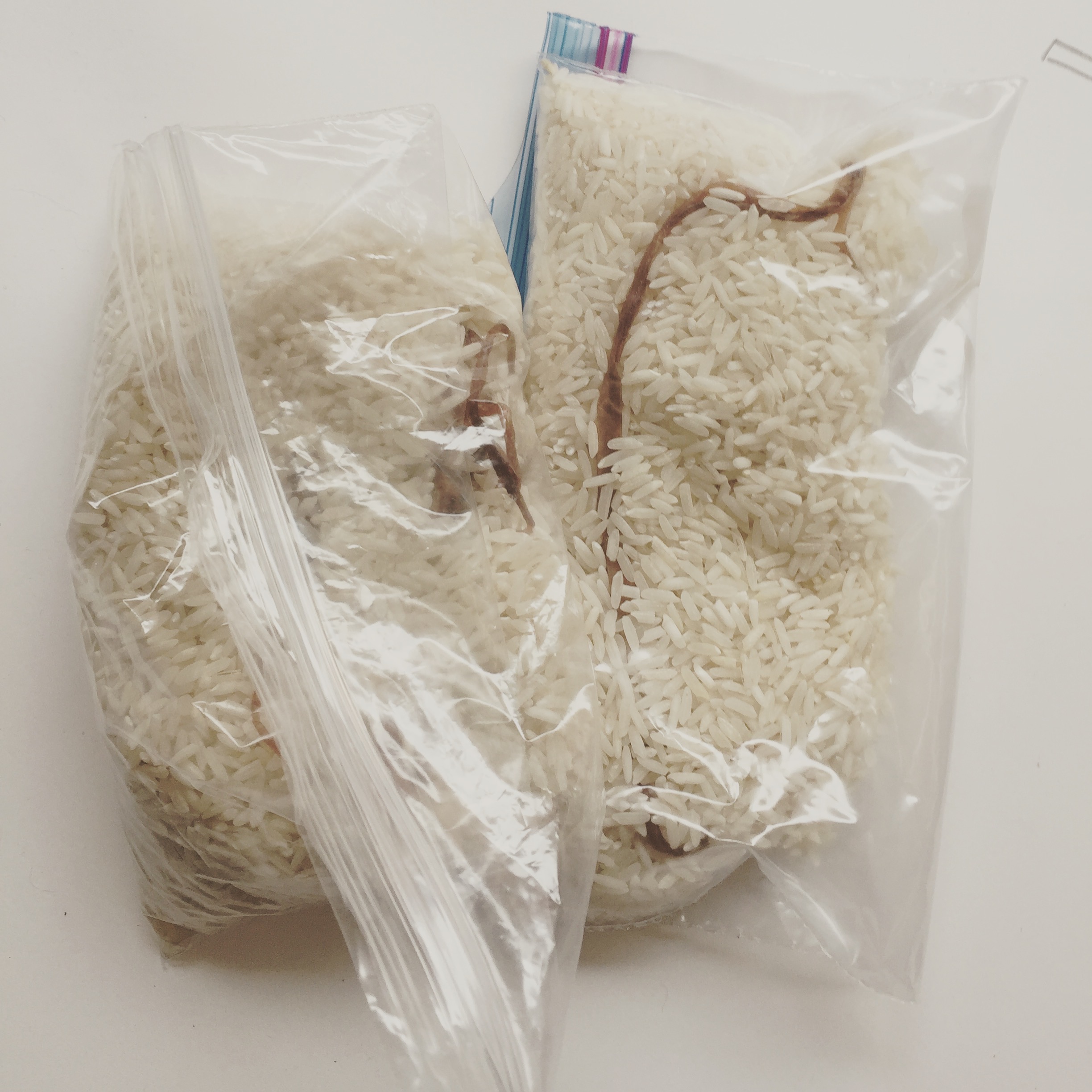
By rolling and folding the kombucha paper, I was able to create a material that is similar to yarn. Top: Rolled Technique Bottom: Folded Technique

By rolling and folding the kombucha paper, I was able to create a material that is similar to yarn. Top: Rolled Technique Bottom: Folded Technique

Though smoother and easy to manipulate,the rolled kombucha yarn maintains its tackiness.
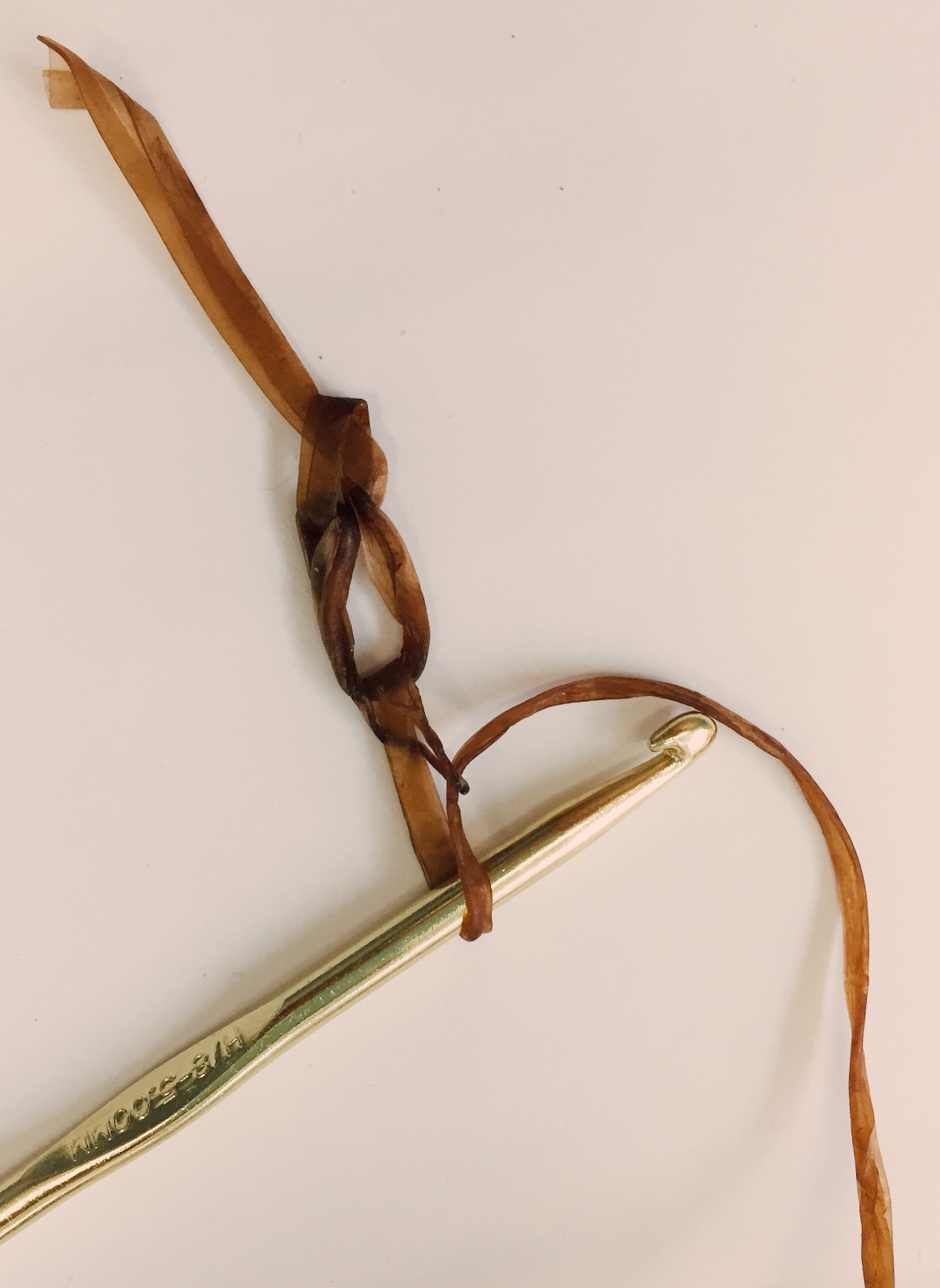
Though much more difficult to pull apart than the rolled version, the truncated edges made it difficult to get a tight and even stitch. Like origami folds, I suspect that with increased pleats, a more pliable yarn will be achieved.
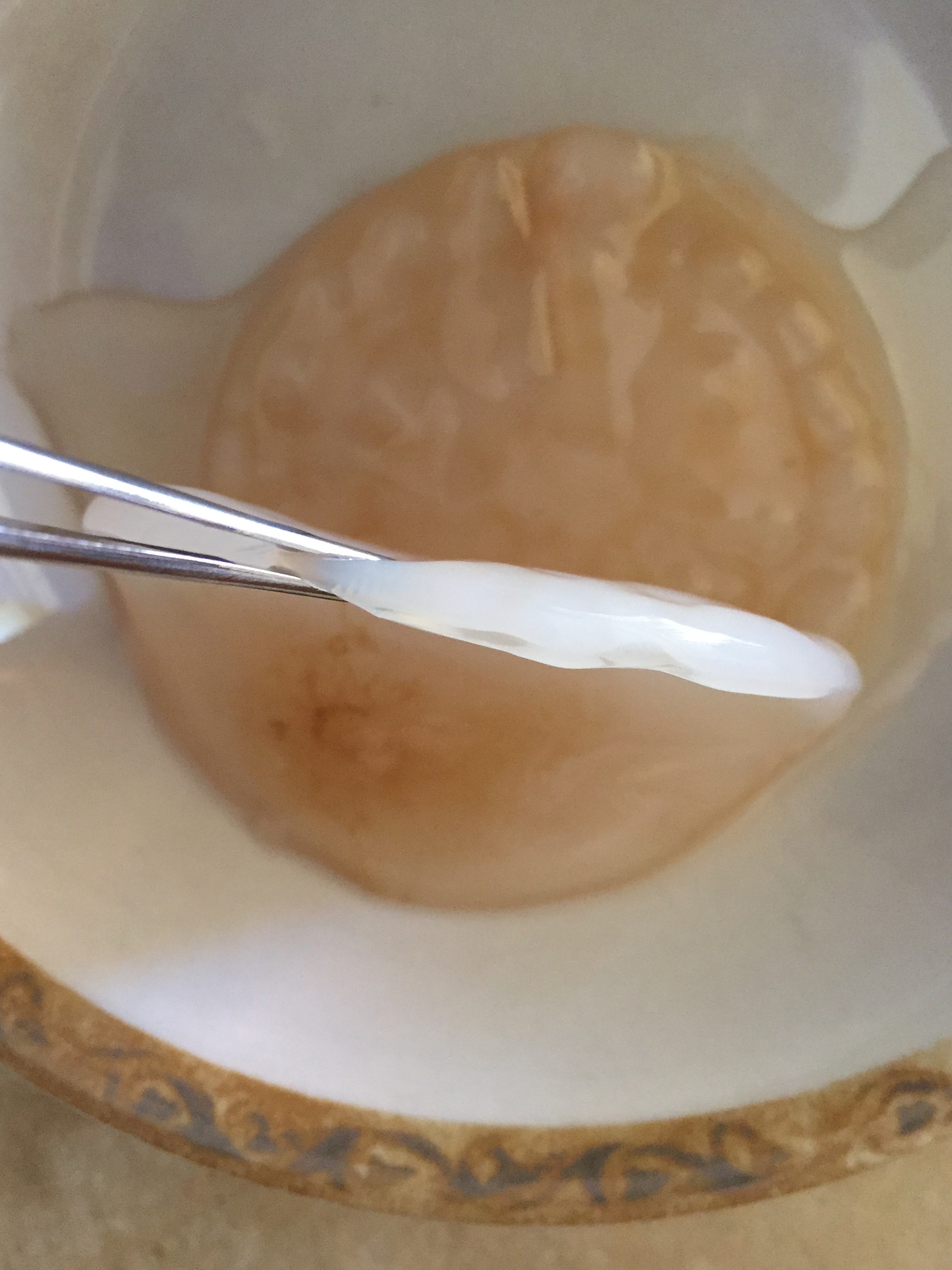
After two weeks of growing, I harvested my first SCOBY. It was really great watching the strands move up and create the mat. It was so thick, I was able to separate my rounds into two "sheets." This photo shows the separation of the two layers.
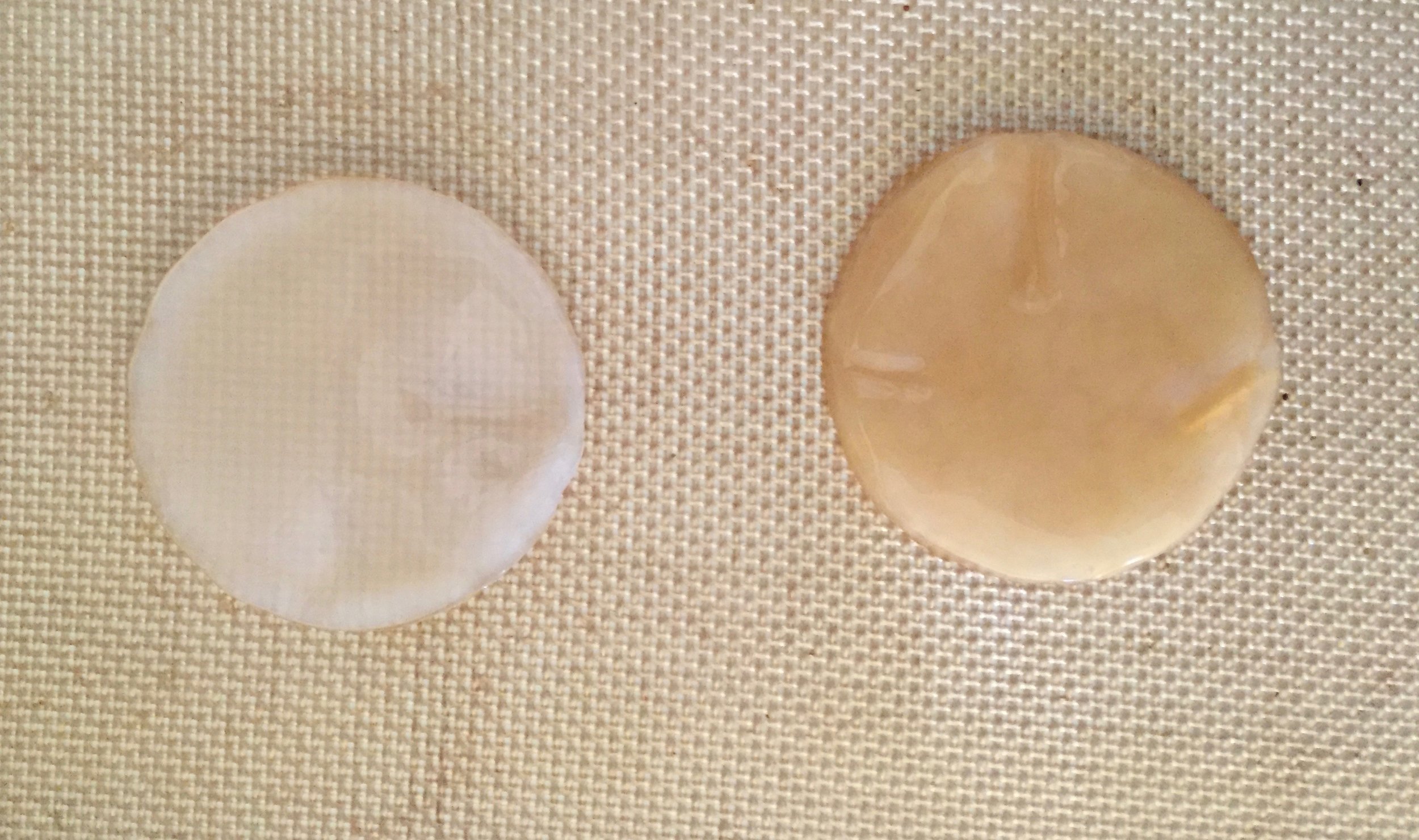
After two weeks of growing, I harvested my first SCOBY. It was really great watching the strands move up and create the mat. It was so thick, I was able to separate my rounds into two "sheets." This photo shows the two separate layers. The uppermost layer is on the left, and the bottom layer on the right.
SELF-BRACING STRUCTURES IN LINEN ROVING
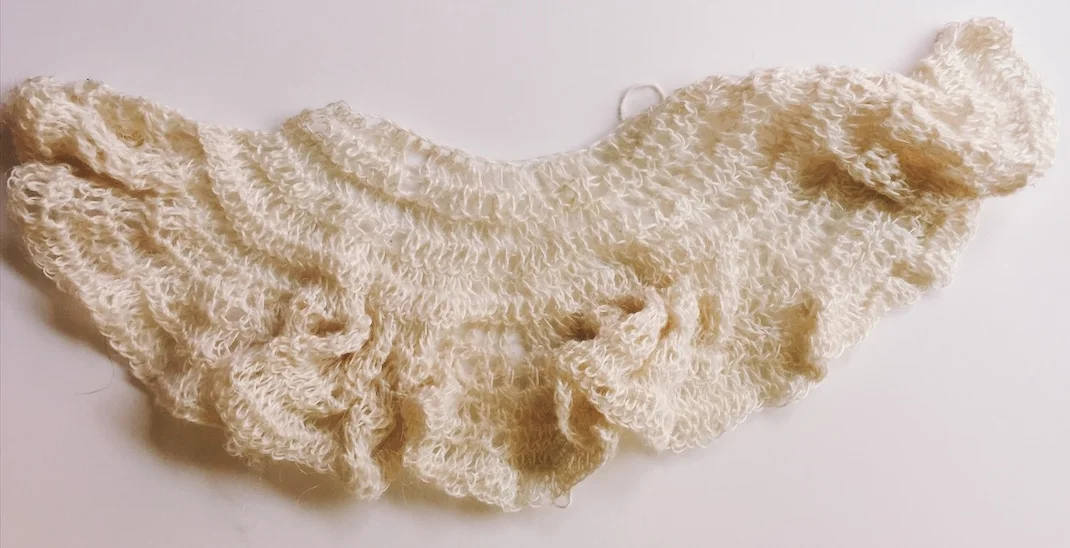
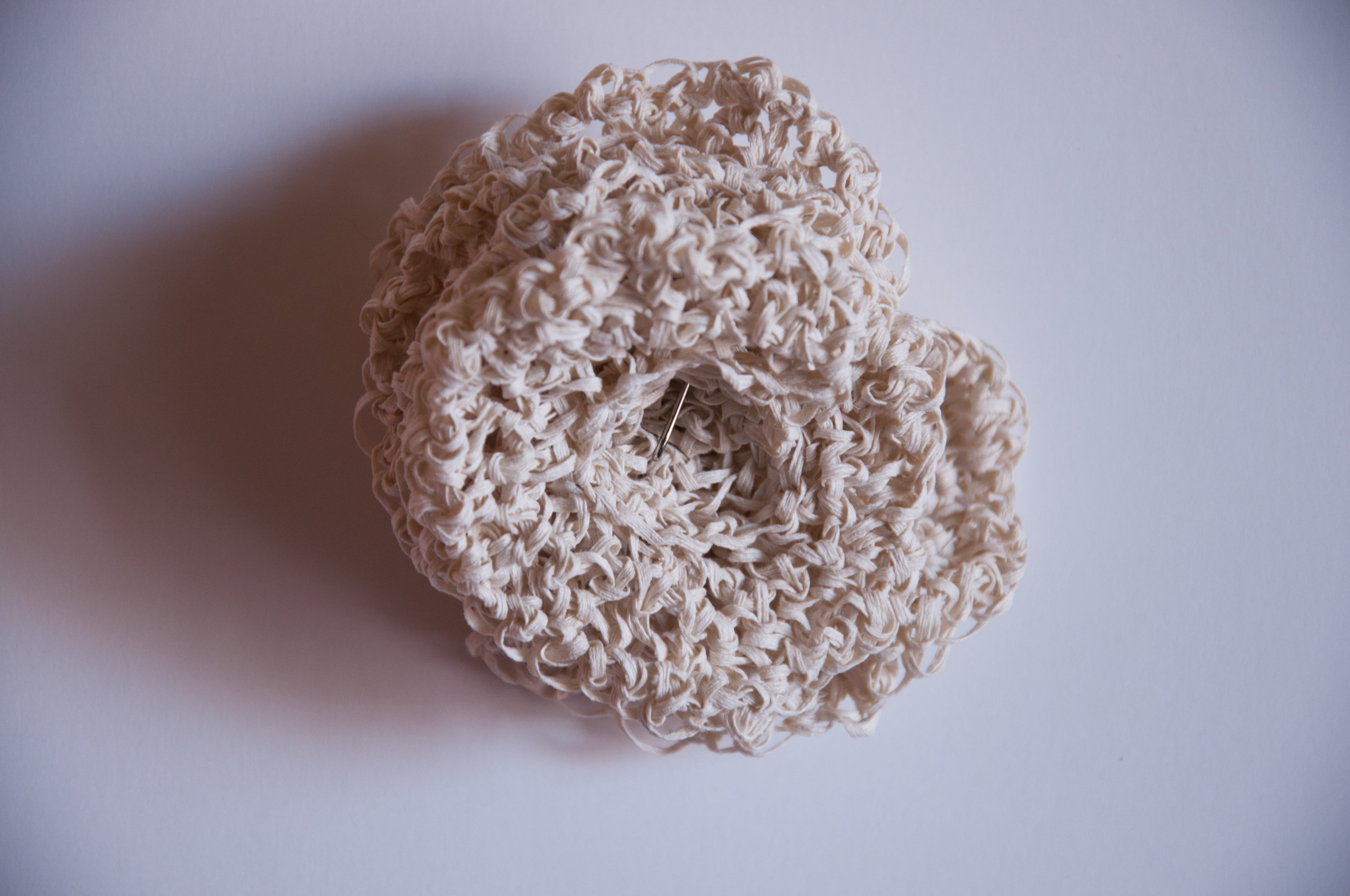
After spending a month working on this 4"x12" piece in my go to ratio of 3:4, eight rows into the work, I was surprised that this yarn was not exhibiting the characteristic twirls that I had created with yarns of a similar weight and body. On the ninth row, I added an algorithm of "self bracing" to the piece--two sections joined at stitches four and eight within the 3:4 ratio. While the length of the braced sections (or nodes) do not contain the 3:4 ratio in patterning, the internodes do. These internodes have a flat patterning where the characteristic wave is confined to the distal edge.
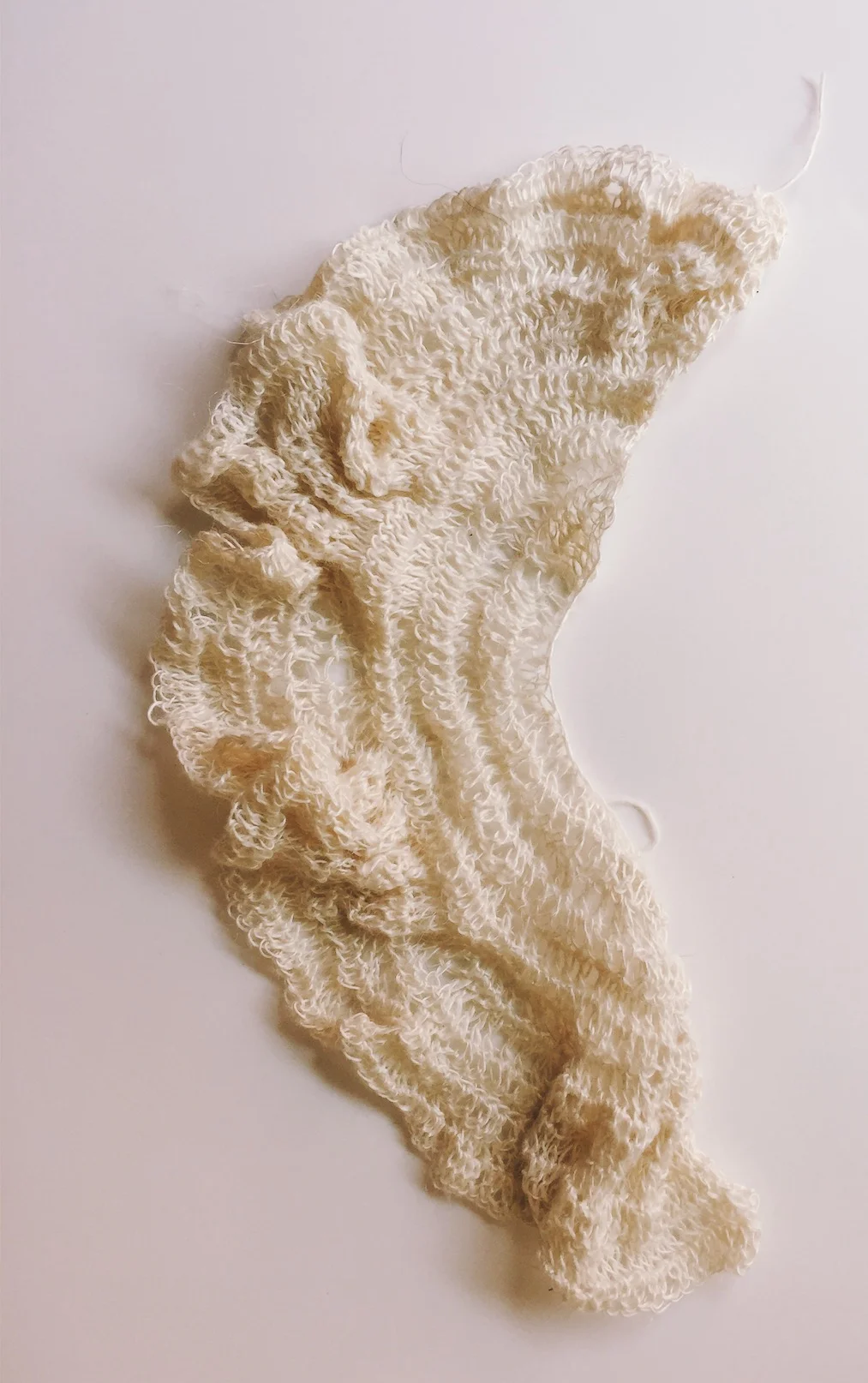
After spending a month working on this 4"x12" piece in my go to ratio of 3:4, eight rows into the work, I was surprised that this yarn was not exhibiting the characteristic twirls that I had created with yarns of a similar weight and body. On the ninth row, I added an algorithm of "self bracing" to the piece--two sections joined at stitches four and eight within the 3:4 ratio. While the length of the braced sections (or nodes) do not contain the 3:4 ratio in patterning, the internodes do. These internodes have a flat patterning where the characteristic wave is confined to the distal edge.

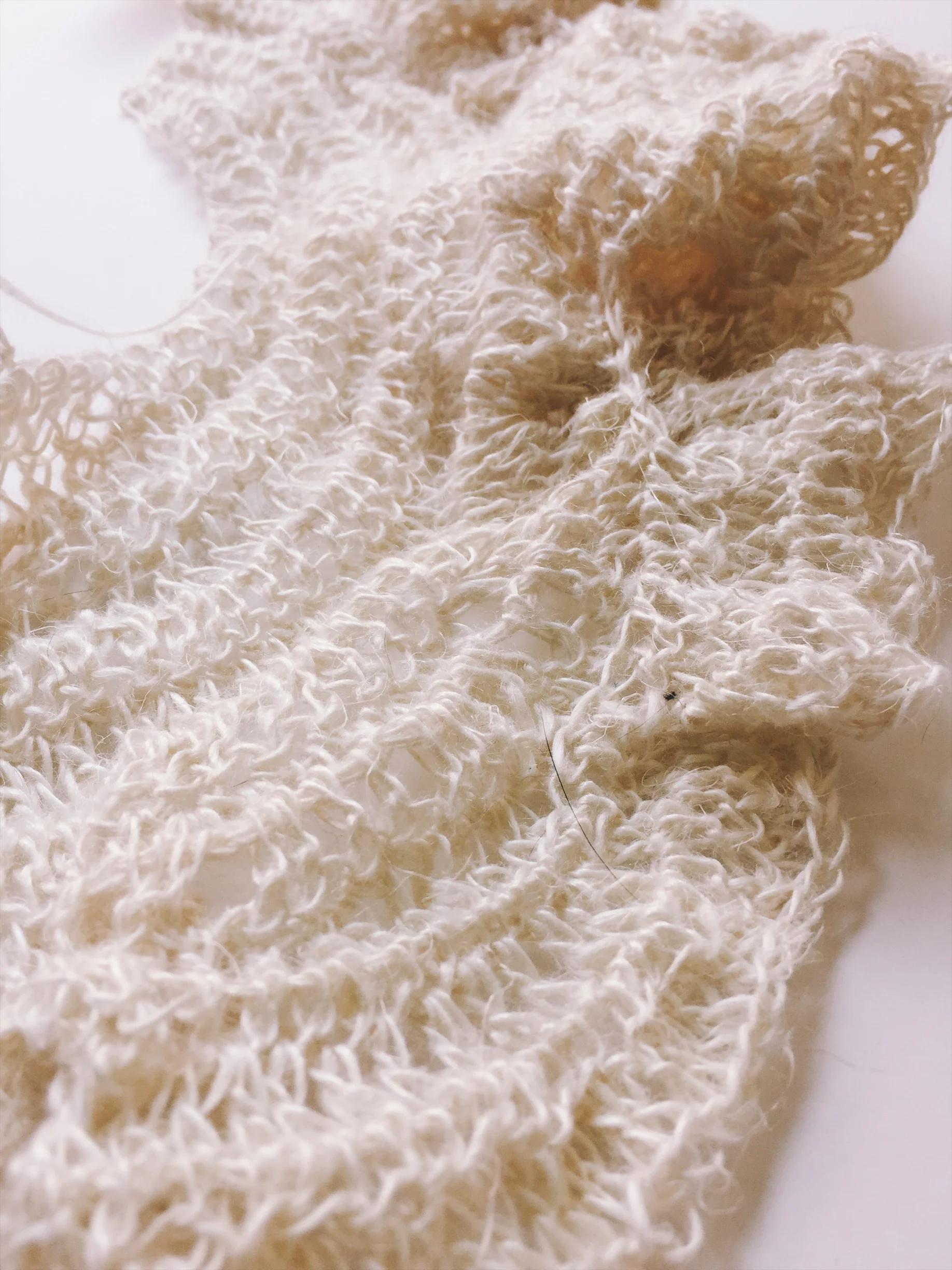

After reading work on surfaces of flattened negative curvature and constant negative curvature (Eugenio Beltrami's Pseudosphere), I decided to apply the bracing structure to work in the round (aka the pseudosphere). With a ratio of 4:5, the negative curvature develops a spiraling pattern.

Using what is known as the Tunisian Stitch for the base of the circle in the first three rows, it is possible to invert the piece and have it support its own weight. At least, that is to say at this size.

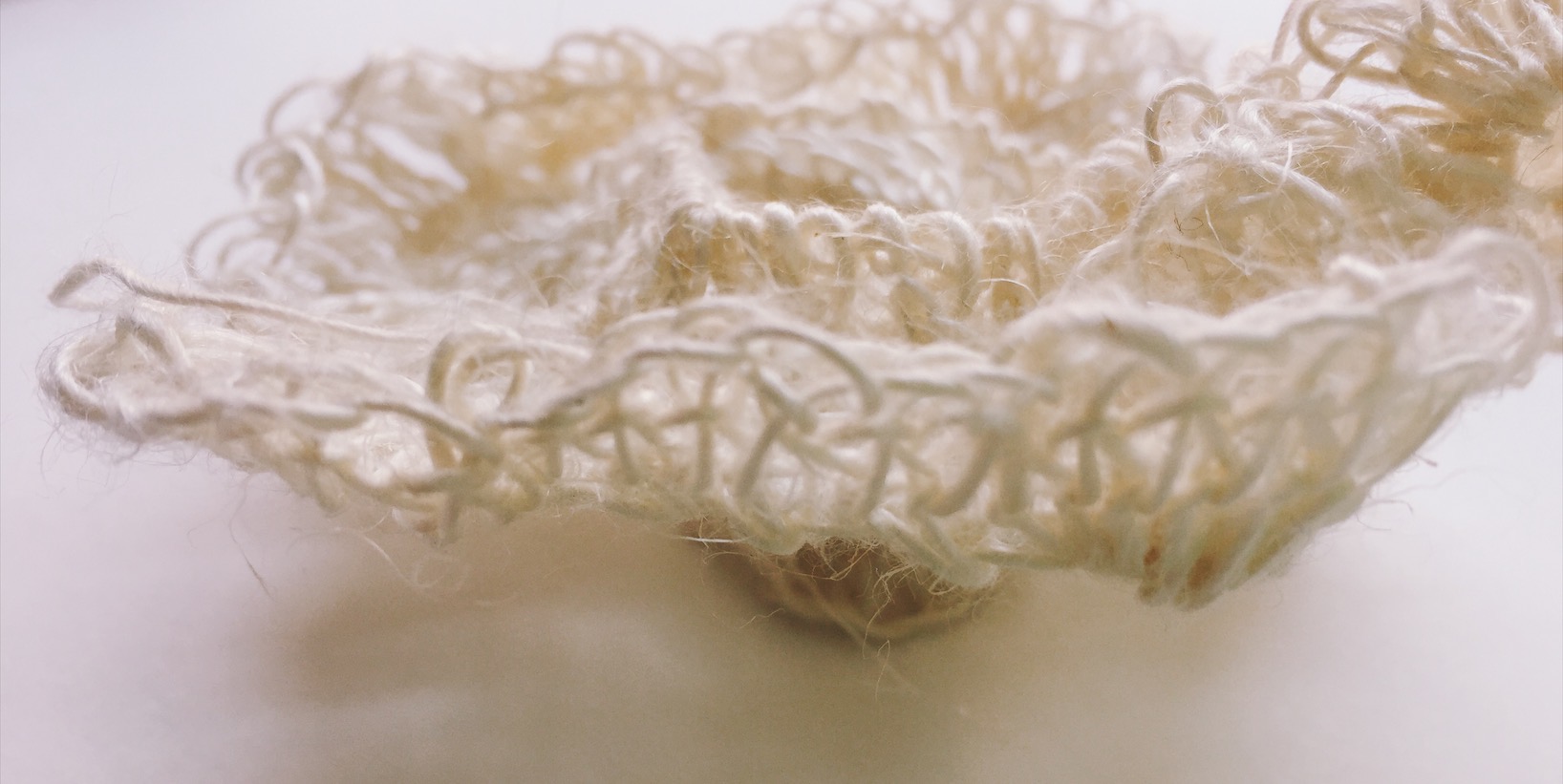
The form was then inverted. Due to the three rows of Tunisian Stitches, which create the self-bracing structure, the piece is able to support its own weight.
12-17 September 2017
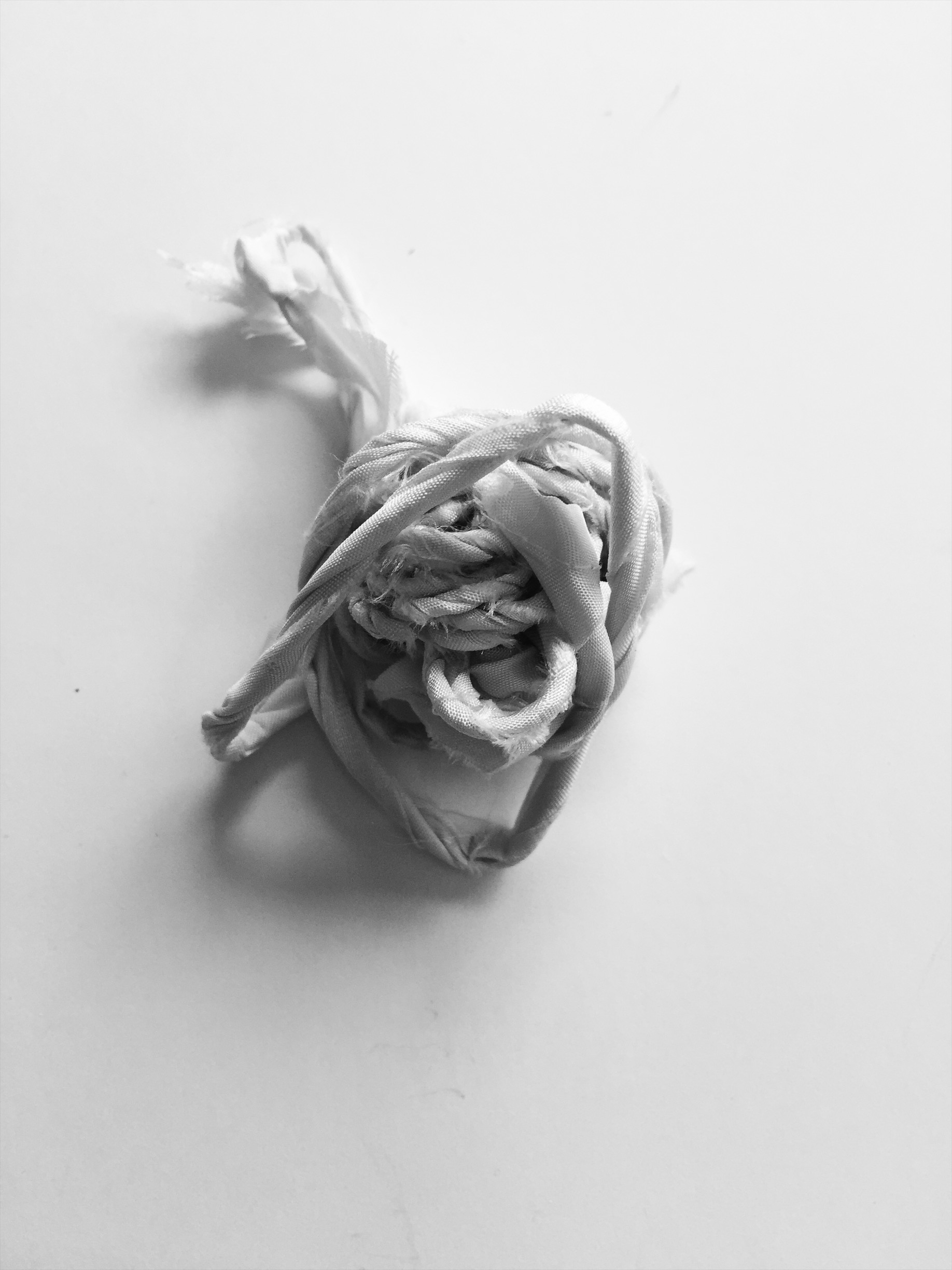
NEW LIFE FOR THE BELOVED SILK BLOUSE

Inspired by the recycled textile events throughout New York Textile Month, I thought about how many pieces of fiber I already own. Why not repurpose the material instead of throwing it away?




WILD CROCHET WORKSHOP

What exactly does this all mean?
If nature is series of infinite cycles, science and art are the physical and philosophical ways of understanding nature--they are similar as they both originate from places of inquiry. And many times, their ideas overlap and feed one another. Design traverses the paths in between art and science with its end goal of being the production of a product. All three of these items are present in the development of hyperbolic crochet.
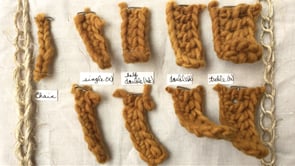
What stitches do you use to crochet hyperbolically? I've used all of these; however, I no longer use treble, as it creates slack in the tensile strength and makes the hyperbolic pattern disappear.


A short video ofgrowth and abandonment. (Because other than some water I basically ignored them for a month post-graduation.)

Bioplastic made with ground eggshells, ground clamshell shells, rose hips, egg whites, tapioca starch, water, vegetable glycerin, and lemon juice. Now to figure out how to sew it up!
#wipresidency #wipresident #textileart#textiledesign #resiliency #wildcrochet#nytm @newyorktextilemonth#scienceintextiles

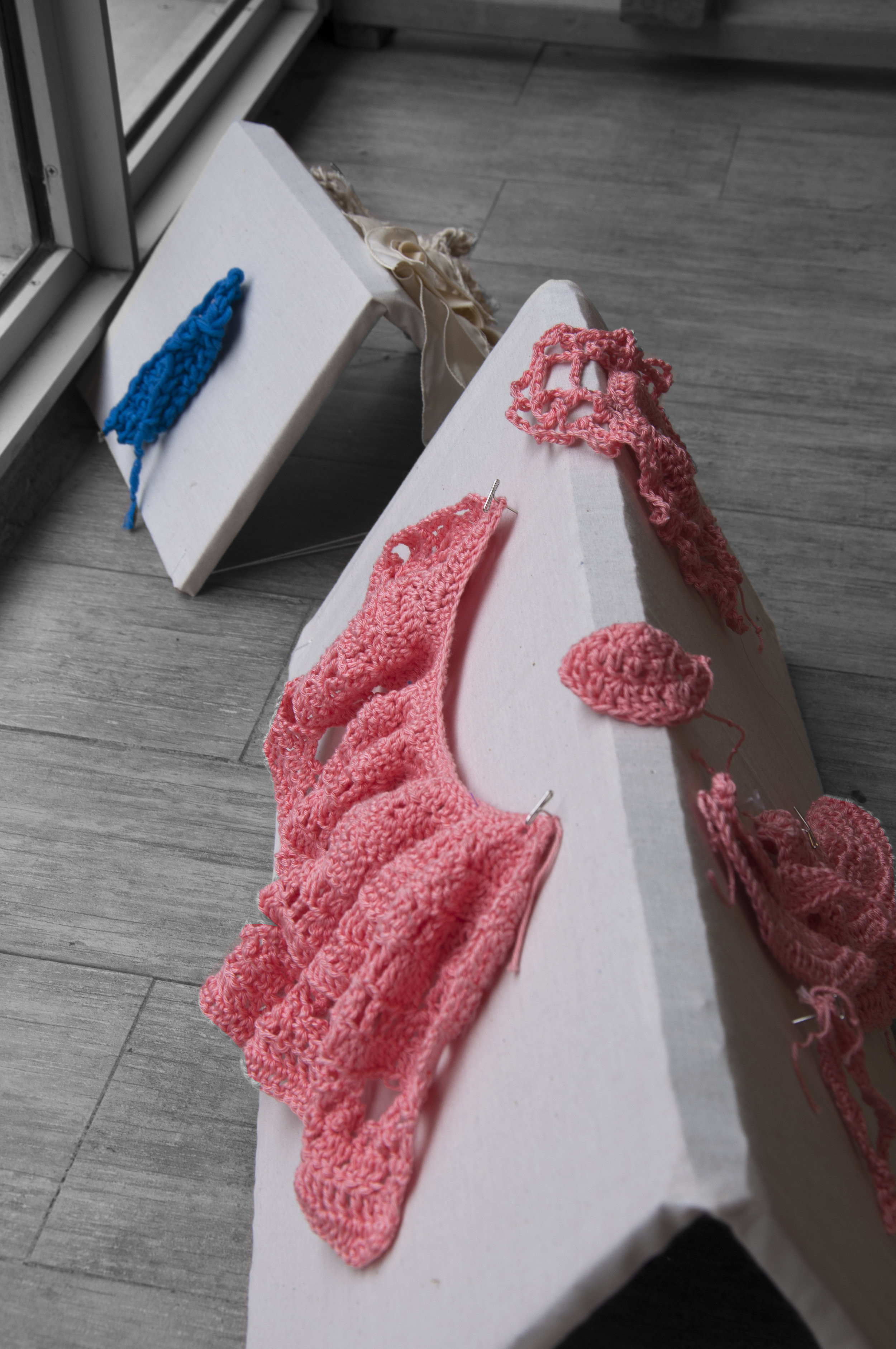
Unlike knitting (which I also love and do), crochet cannot be successfully created via machine. Crochet involves a chain and three strands of yarn, meaning that the number of points and angles of insertion are now infinite. So, until grasshopper, python, processing, and I can figure out a way to create a true crochet piece, these plaster casts will have to do.
19-23 September 2017
WILD CROCHET+ALGIKNIT = HYPERBOLICALLY CROCHETED ALGAE
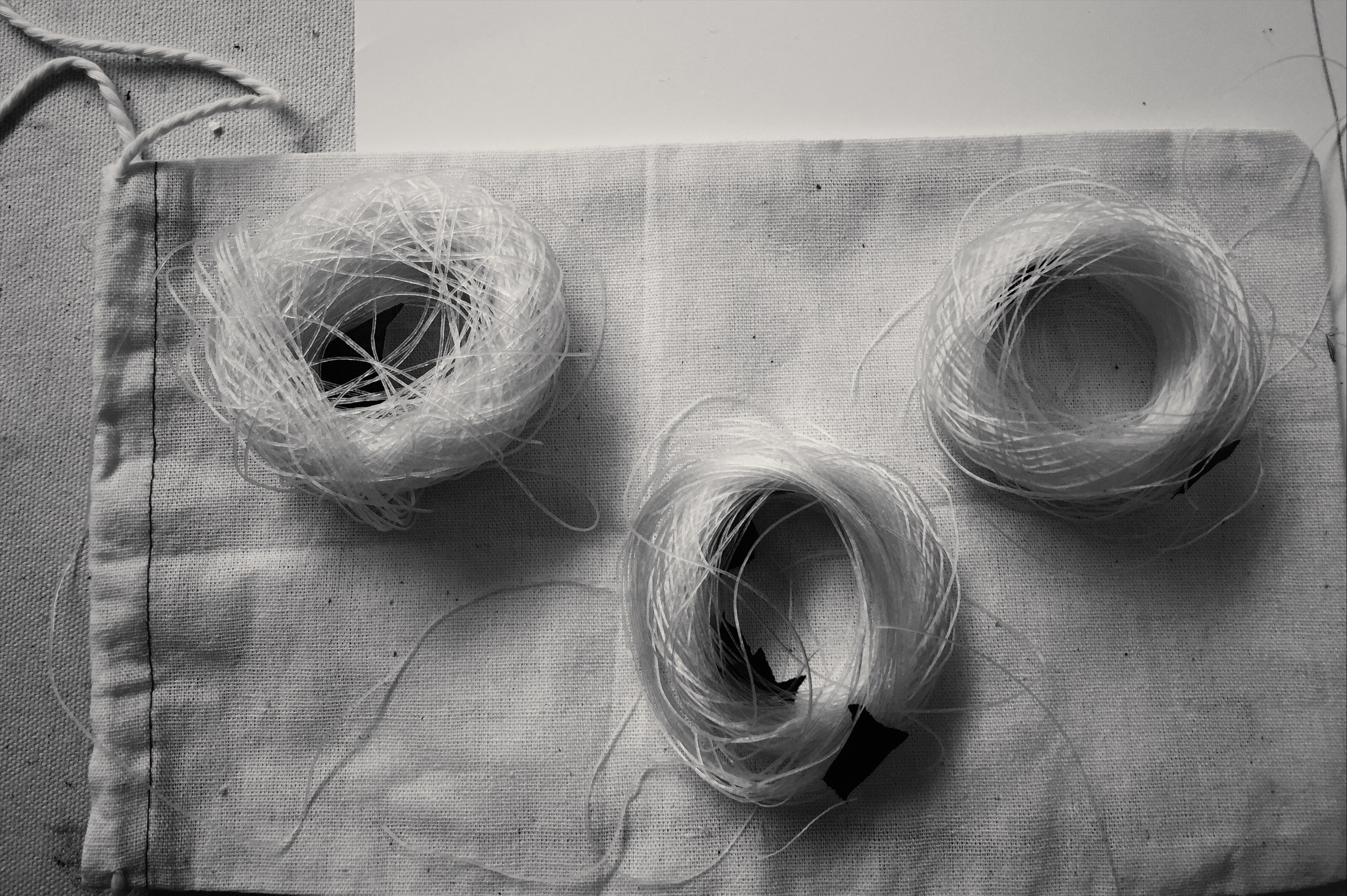
The @algiknit filament has arrived!!! There is such a diaphanous quality about it. It makes me feel like I'm working with something ethereal. BUT, it's not, and that's the incredible thing about it. @algiknitis composed of algae extracted from kelp and biopolymers that are extruded and then cured in a salt bath. The amazing thing about @algiknit 's material process is that it operates in a closed loop product lifecycle. Compared to other conventional means of textile production, this closed loop lifecycle means a significant reduction in its environmental footprint.
Grow it-Wear it-Compost it!

Chain of 20 stitches and row 1 crocheted in double crochet with a ratio of 3:4 with @algiknit. More process photos to come.
#wipresidency #wipresident #textileart#textiledesign #hyperboliccrochet#resiliency #algae #kelp #wildcrochet@tedtextiles @newyorktextilemonth

Chain of 20 stitches and row 1 crocheted in double crochet with a ratio of 3:4 with @algiknit. More process photos to come.
#wipresidency #wipresident #textileart#textiledesign #hyperboliccrochet#resiliency #algae #kelp #wildcrochet@tedtextiles @newyorktextilemonth

Chain of 20 stitches and row 1 crocheted in double crochet with a ratio of 3:4 with @algiknit. More process photos to come.
Join me and @algiknit co-founder @aleksandra.gos on Saturday 2-5p @textileartscenter (#tacmanhattan) as we talk about textiles, resiliency, and the future of biomaterials.
#wipresidency #wipresident #textileart#textiledesign #hyperboliccrochet#resiliency #algae #kelp #wildcrochet@tedtextiles @newyorktextilemonth
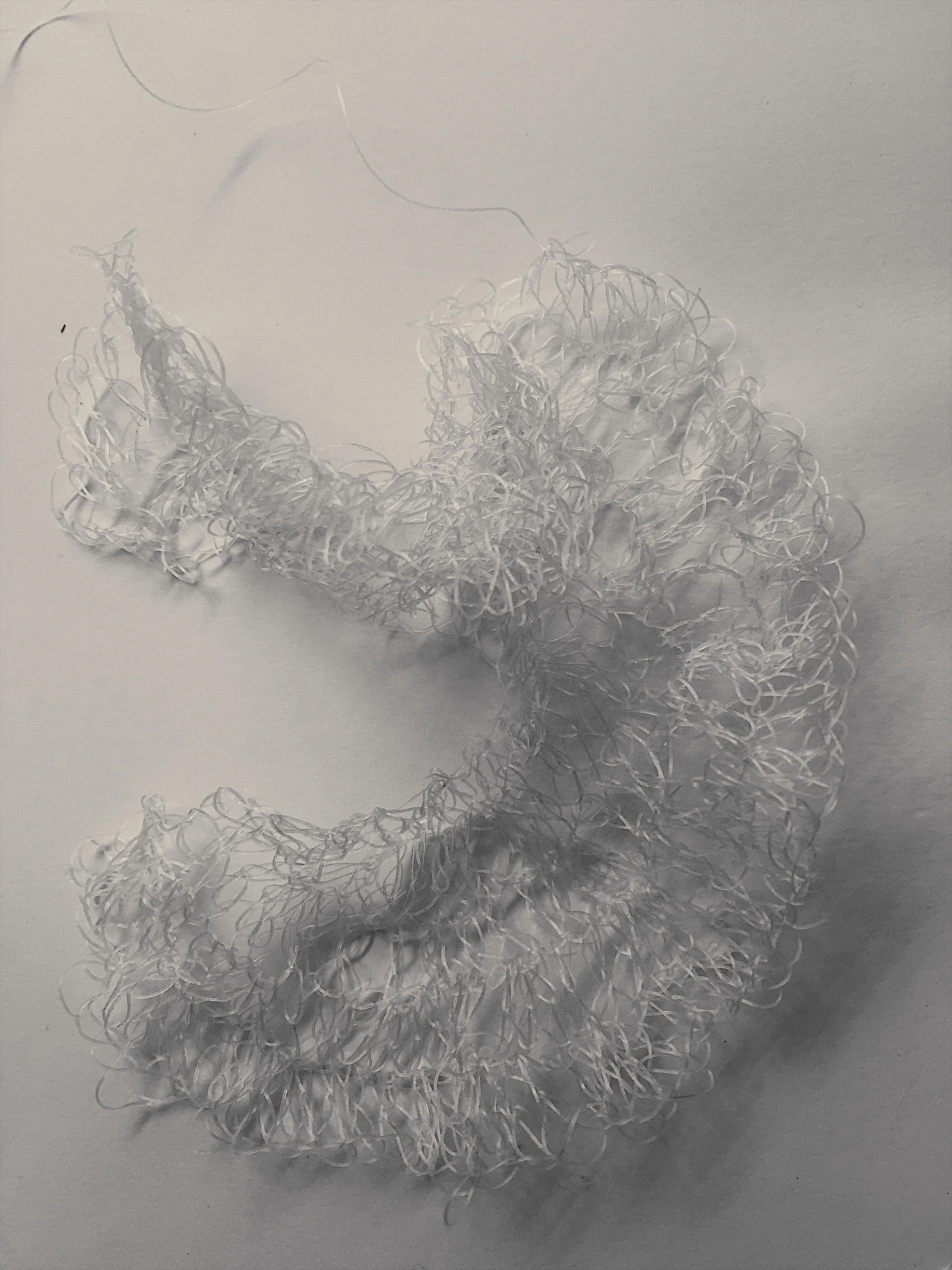
Crocheted in double crochet with a ratio of 3:4 with @algiknit.
#wipresidency #wipresident #textileart#textiledesign #hyperboliccrochet#resiliency #algae #kelp #wildcrochet@tedtextiles @newyorktextilemonth
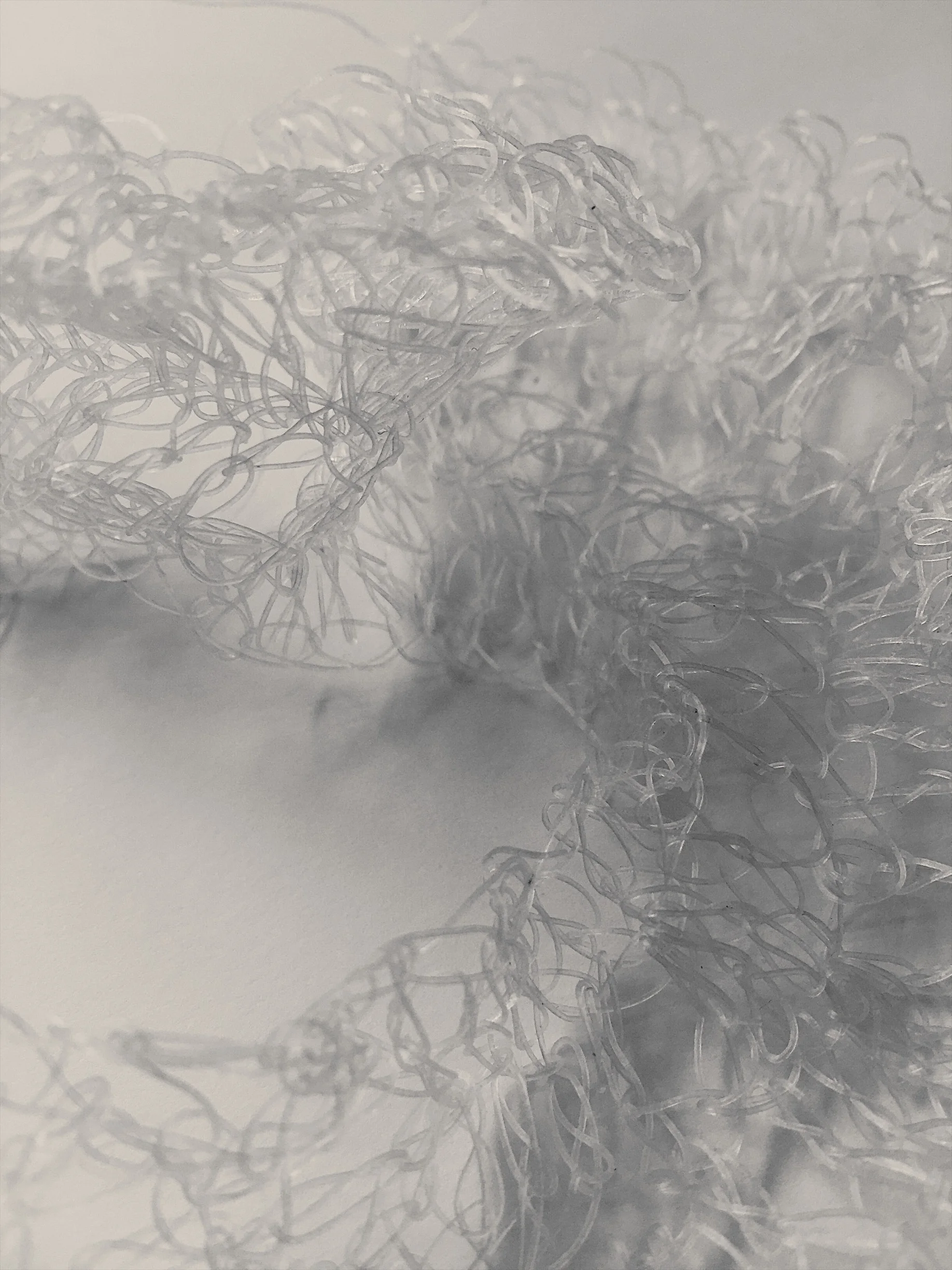
Crocheted in double crochet with a ratio of 3:4 with @algiknit.
#wipresidency #wipresident #textileart#textiledesign #hyperboliccrochet#resiliency #algae #kelp #wildcrochet@tedtextiles @newyorktextilemonth
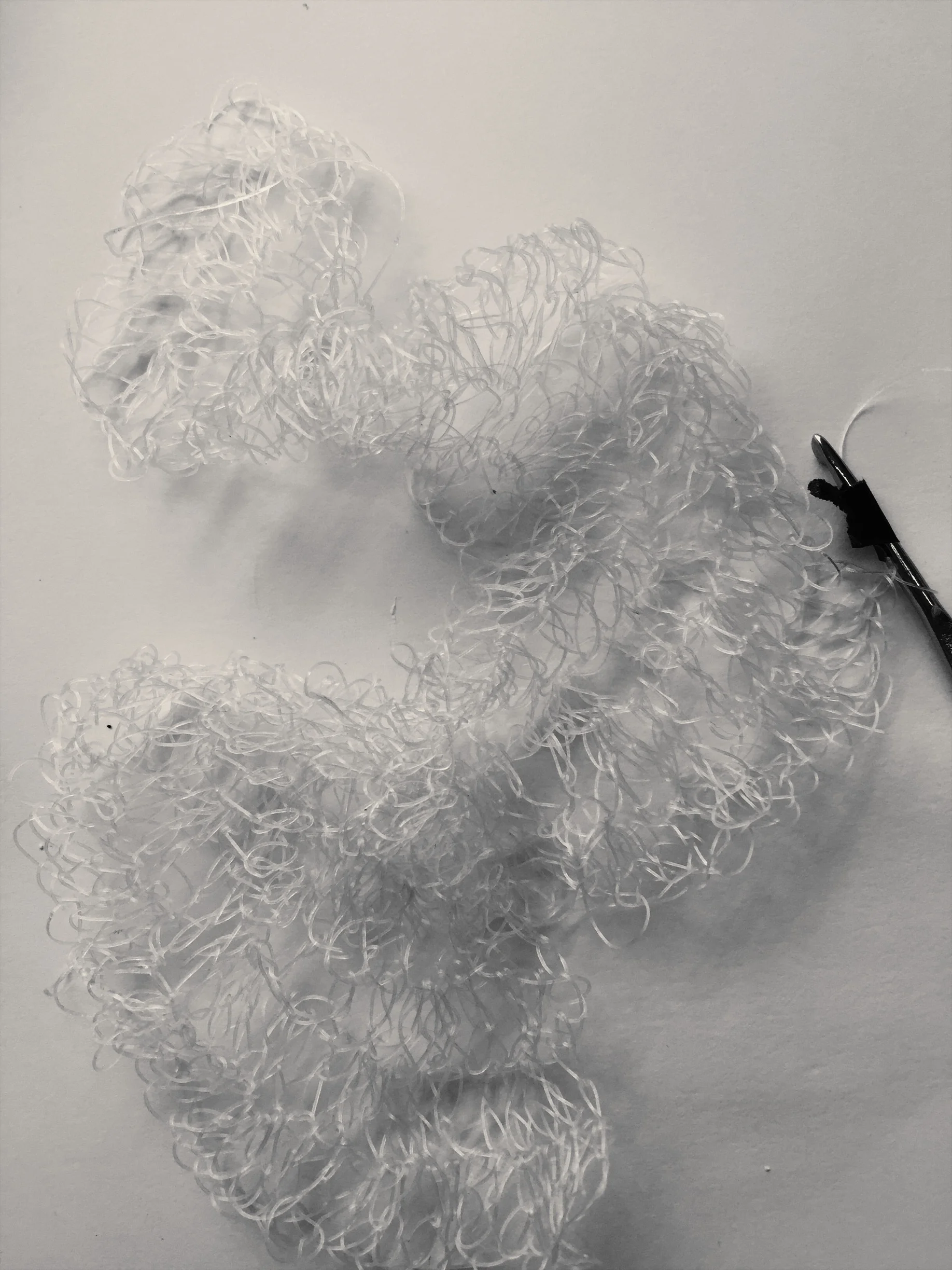
Crocheted in double crochet with a ratio of 3:4 with @algiknit.
#wipresidency #wipresident #textileart#textiledesign #hyperboliccrochet#resiliency #algae #kelp #wildcrochet@tedtextiles @newyorktextilemonth
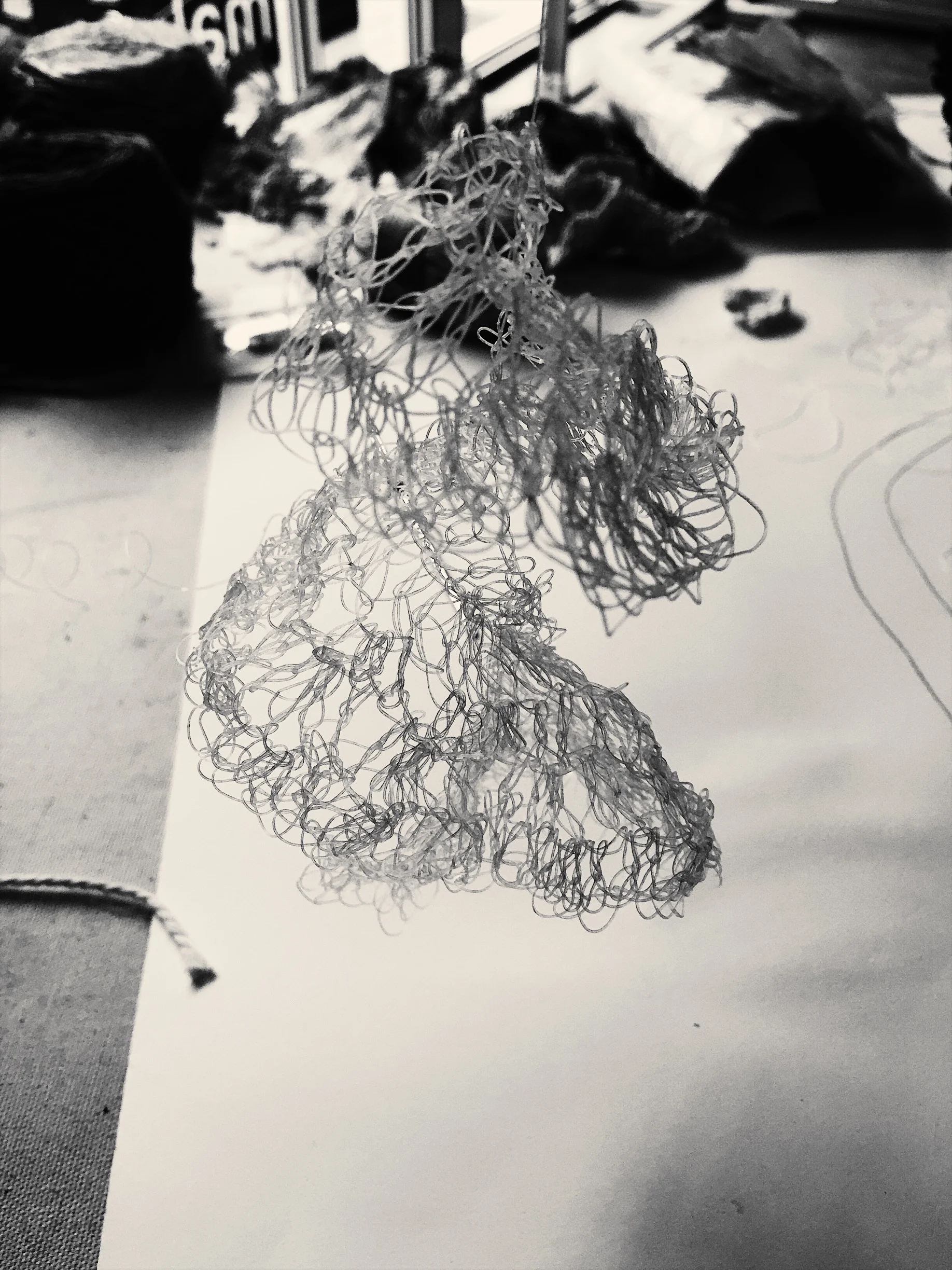
Crocheted in double crochet with a ratio of 3:4 with @algiknit.
#wipresidency #wipresident #textileart#textiledesign #hyperboliccrochet#resiliency #algae #kelp #wildcrochet@tedtextiles @newyorktextilemonth
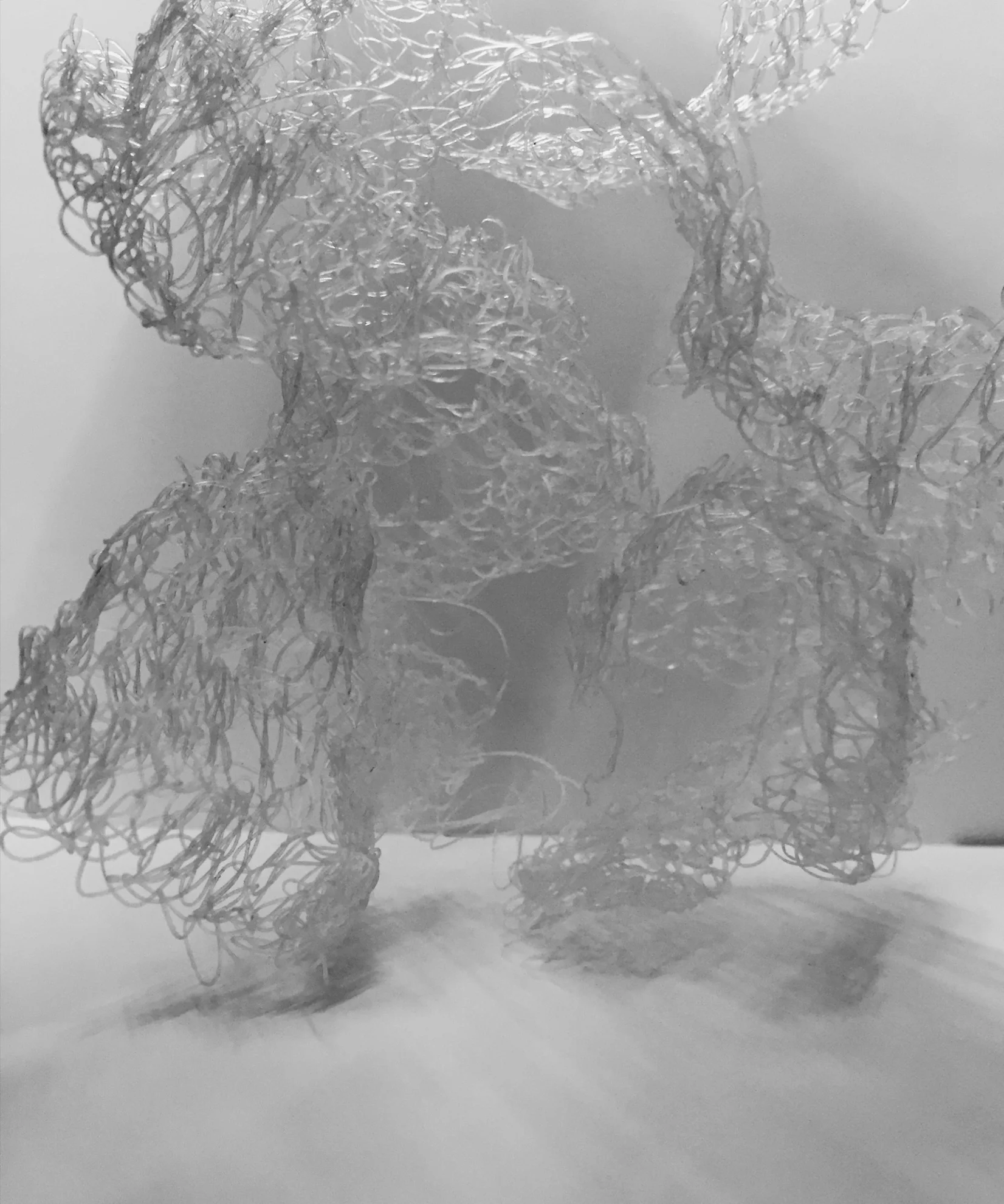
One on the left, two on the right. @algiknit samples #1 and #2 side by side. They're both about 5" long. AlgiKnit#2 is crocheted in single crochet with a ratio of 2:3.
To learn more about this #biomaterial, head to the Textile Arts Center #tacmanhattantomorrow 9/23/17 where @algiknit and I will be discussing all things Biomaterial Textile Futures.
.
#wipresidency #wipresident #textileart#textiledesign #hyperboliccrochet#resiliency #algae #kelp #wildcrochet@tedtextiles @newyorktextilemonth

AlgiKnit#2 is crocheted in single crochet with a ratio of 2:3. Believe it or not, but by reducing the height of the stitch, and changing the ratio to 2:3, it's formation is showings signs of self-assembly.
To learn more about this #biomaterial, head to the Textile Arts Center #tacmanhattantomorrow 9/23/17 where @algiknit and I will be discussing all things Biomaterial Textile Futures.
.
#wipresidency #wipresident #textileart#textiledesign #hyperboliccrochet#resiliency #algae #kelp #wildcrochet@tedtextiles @newyorktextilemonth
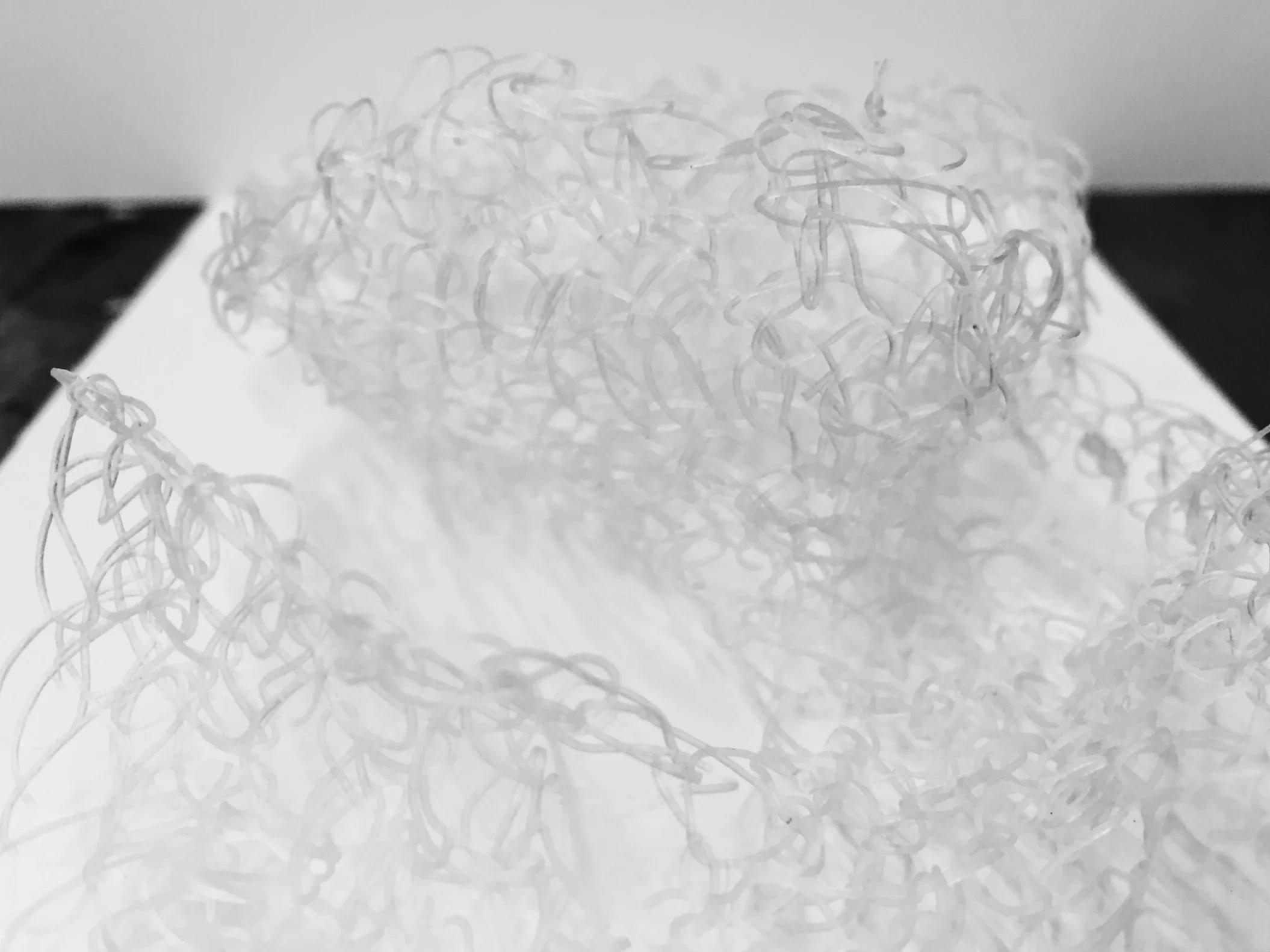
AlgiKnit#2 is crocheted in single crochet with a ratio of 2:3. Believe it or not, but by reducing the height of the stitch, and changing the ratio to 2:3, it's formation is showings signs of self-assembly.
#wipresidency #wipresident #textileart#textiledesign #hyperboliccrochet#resiliency #algae #kelp #wildcrochet@tedtextiles @newyorktextilemonth

AlgiKnit#2 is crocheted in single crochet with a ratio of 2:3. Believe it or not, but by reducing the height of the stitch, and changing the ratio to 2:3, it's formation is showings signs of self-assembly.
#wipresidency #wipresident #textileart#textiledesign #hyperboliccrochet#resiliency #algae #kelp #wildcrochet@tedtextiles @newyorktextilemonth

AlgiKnit#2 is crocheted in single crochet with a ratio of 2:3. Believe it or not, but by reducing the height of the stitch, and changing the ratio to 2:3, it's formation is showings signs of self-assembly.
#wipresidency #wipresident #textileart#textiledesign #hyperboliccrochet#resiliency #algae #kelp #wildcrochet@tedtextiles @newyorktextilemonth

The work table during the discussion on #biomaterials with @aleksandra.gos from @algiknit.
@textileartscenter
#wipresident #textileart #textiledesign#hyperboliccrochet #resiliency #algae #kelp#wildcrochet #bioplastic@newyorktextilemonth #nytm
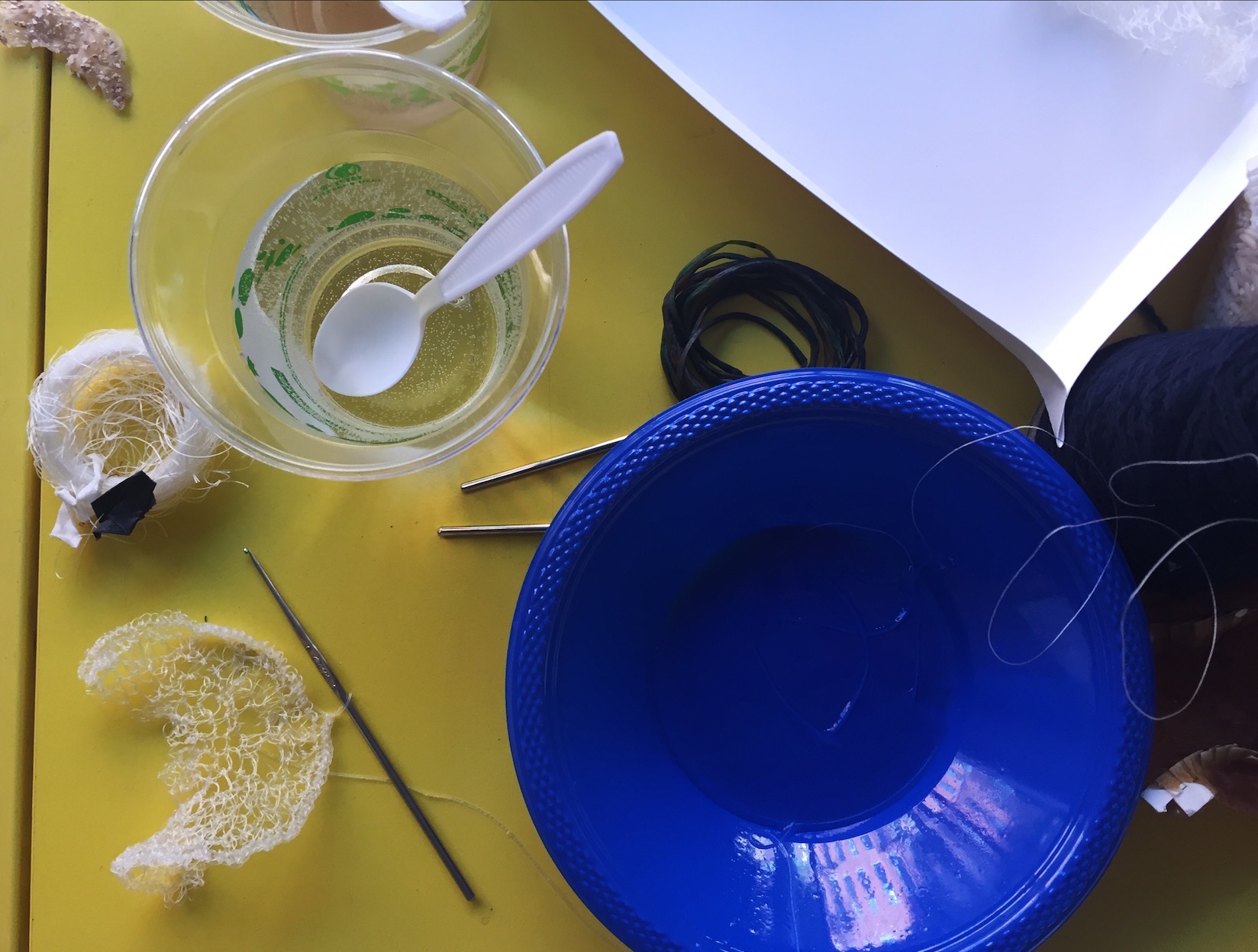
The work table during the discussion on #biomaterials with @aleksandra.gos from @algiknit.
@textileartscenter
#wipresident #textileart #textiledesign#hyperboliccrochet #resiliency #algae #kelp#wildcrochet #bioplastic@newyorktextilemonth #nytm
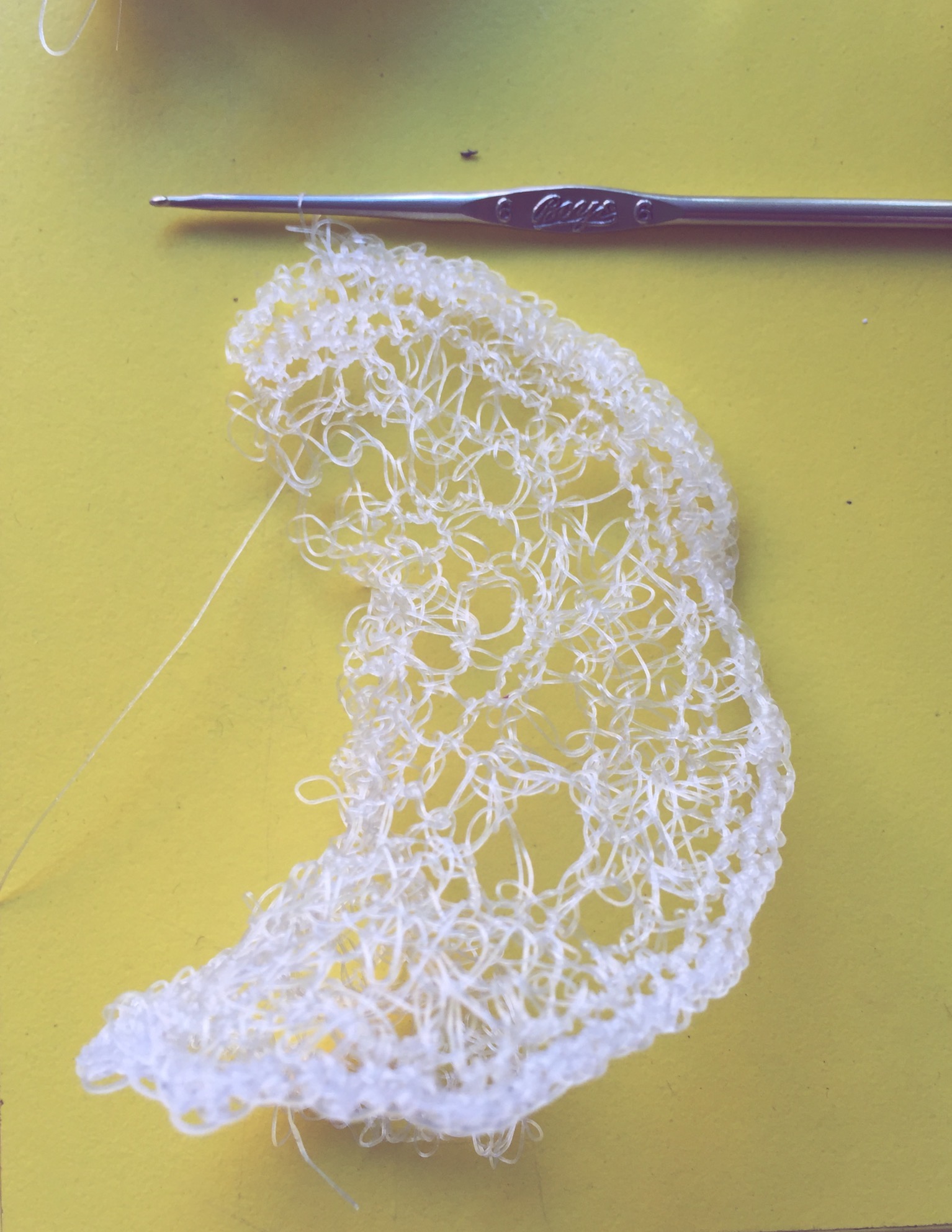
#WIP AlgiKnit#3 is crocheted in single crochet with a ratio of 2:3.
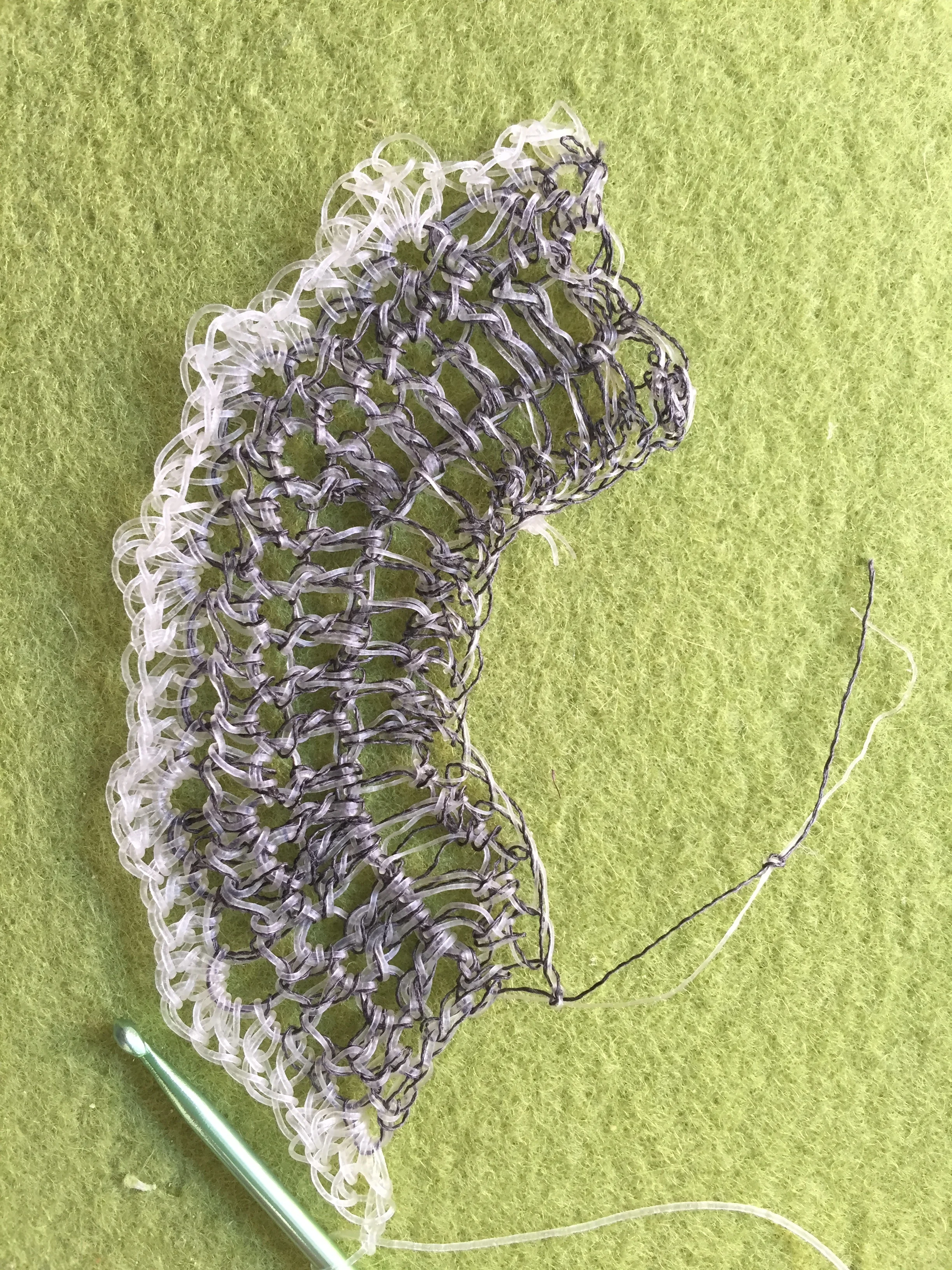
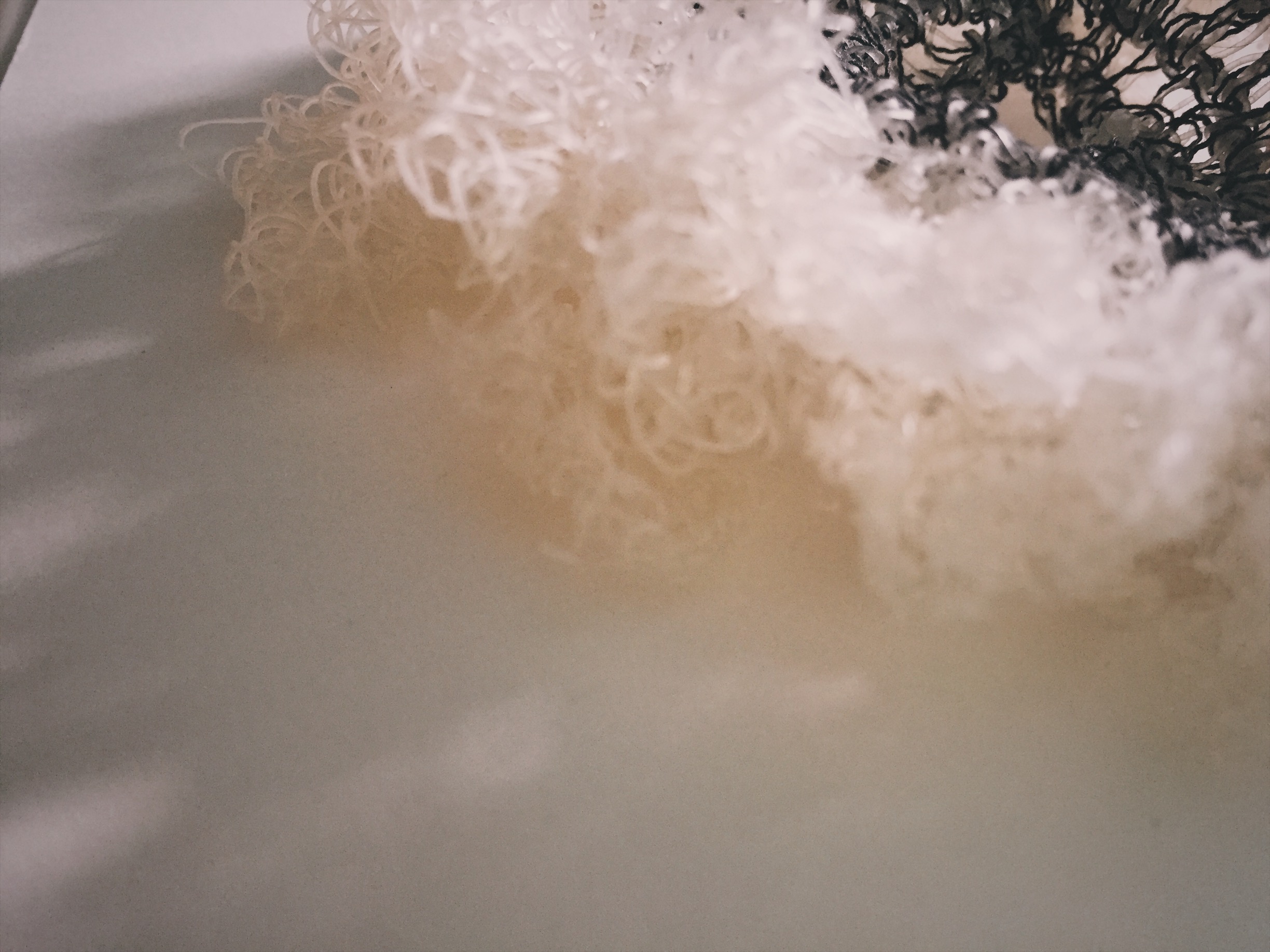
In my previous pieces, I found the filament became brittle and kept breaking by the time I reached row ~15. So, in thinking of a way to work with this, I compared these "symptoms" with that of disordered cellular functions and realized it was an issue of water balance--it was dehydrated. Cellular physiology of any species on Earth is involved in a basic game of water balance. And, after all, @algiknit is natural material, so when working with it, remember it is susceptible to the same changes in water balance. By allowing it to soak in three tablespoons of water for 3-5 minutes, the material was pliable enough to work with. Not only that, the resulting stitches have a tighter tension and even regularity of form throughout the row. .
#wipresidency #wipresident #textileart#textiledesign #hyperboliccrochet#resiliency #algae #kelp #wildcrochet#nytm @newyorktextilemonth#scienceintextiles

#WIP AlgiKnit#3 is crocheted in single crochet with a ratio of 2:3.
In my previous pieces, I found the filament became brittle and kept breaking by the time I reached row ~15. So, in thinking of a way to work with this, I compared these "symptoms" with that of disordered cellular functions and realized it was an issue of water balance--it was dehydrated. Cellular physiology of any species on Earth is involved in a basic game of water balance. And, after all, @algiknit is natural material, so when working with it, remember it is susceptible to the same changes in water balance. By allowing it to soak in three tablespoons of water for 3-5 minutes, the material was pliable enough to work with. Not only that, the resulting stitches have a tighter tension and even regularity of form throughout the row. .
#wipresidency #wipresident #textileart#textiledesign #hyperboliccrochet#resiliency #algae #kelp #wildcrochet#nytm @newyorktextilemonth#scienceintextiles
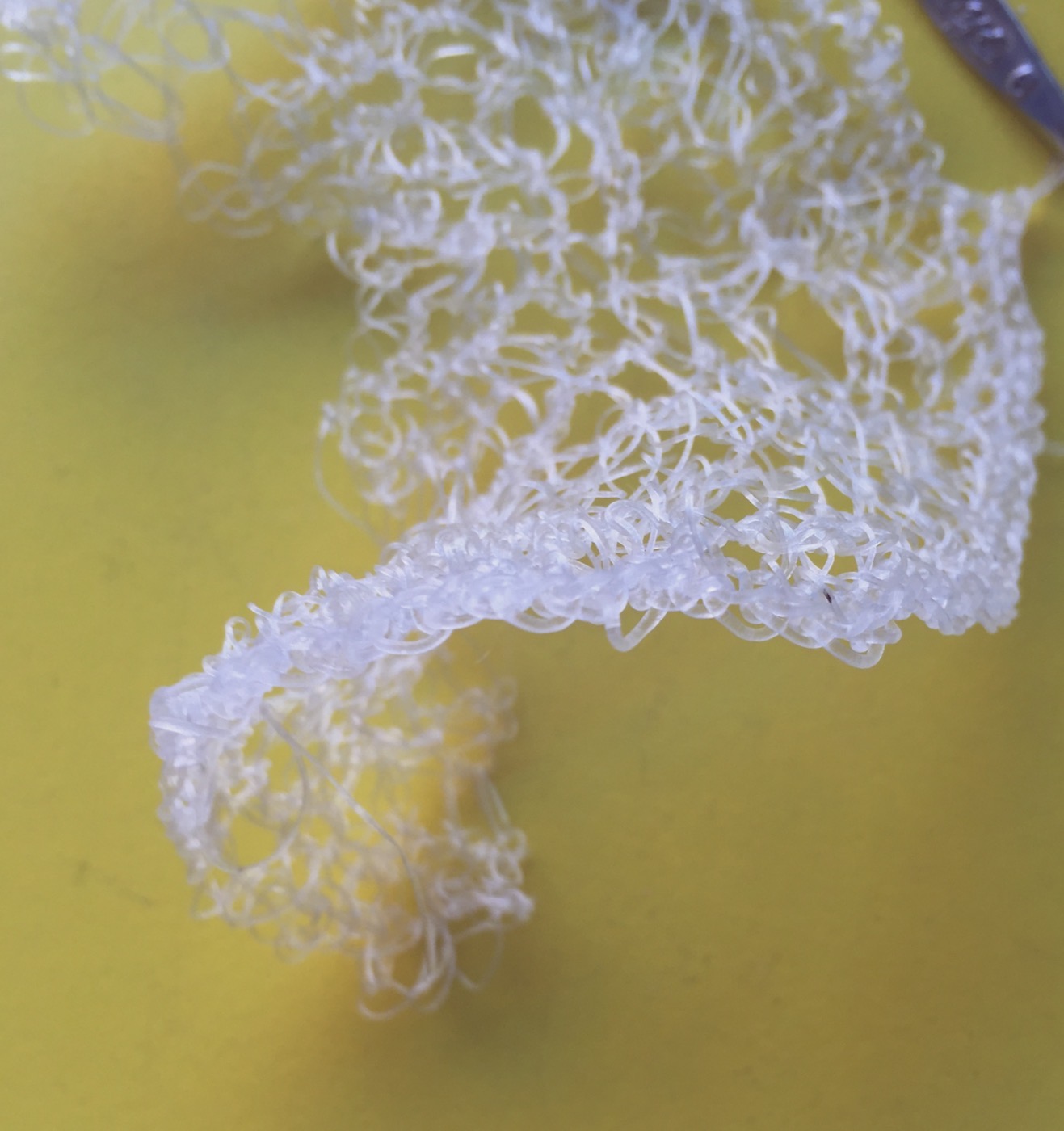
#WIP AlgiKnit#3 is crocheted in single crochet with a ratio of 2:3.
In my previous pieces, I found the filament became brittle and kept breaking by the time I reached row ~15. So, in thinking of a way to work with this, I compared these "symptoms" with that of disordered cellular functions and realized it was an issue of water balance--it was dehydrated. Cellular physiology of any species on Earth is involved in a basic game of water balance. And, after all, @algiknit is natural material, so when working with it, remember it is susceptible to the same changes in water balance. By allowing it to soak in three tablespoons of water for 3-5 minutes, the material was pliable enough to work with. Not only that, the resulting stitches have a tighter tension and even regularity of form throughout the row. .
#wipresidency #wipresident #textileart#textiledesign #hyperboliccrochet#resiliency #algae #kelp #wildcrochet#nytm @newyorktextilemonth#scienceintextiles
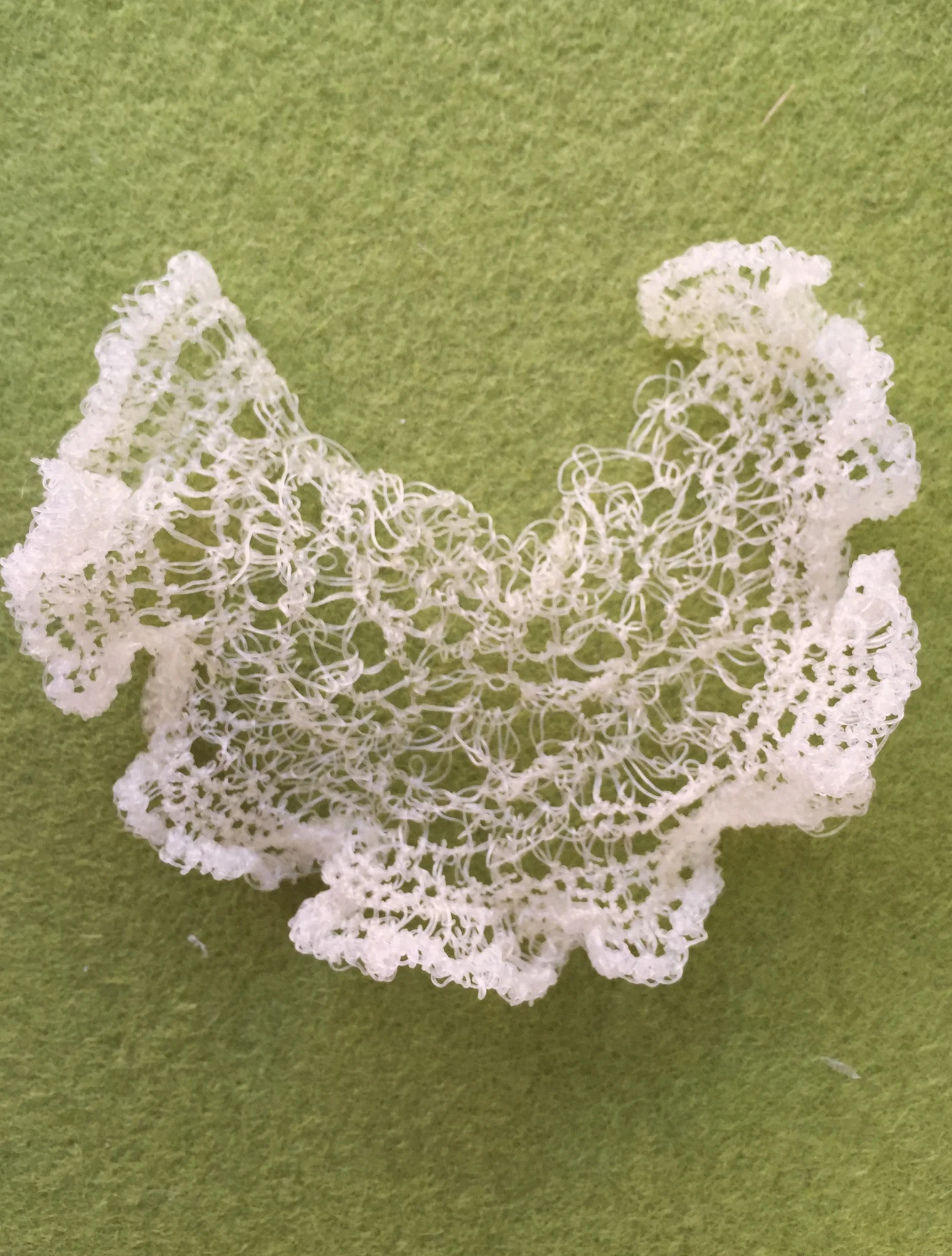


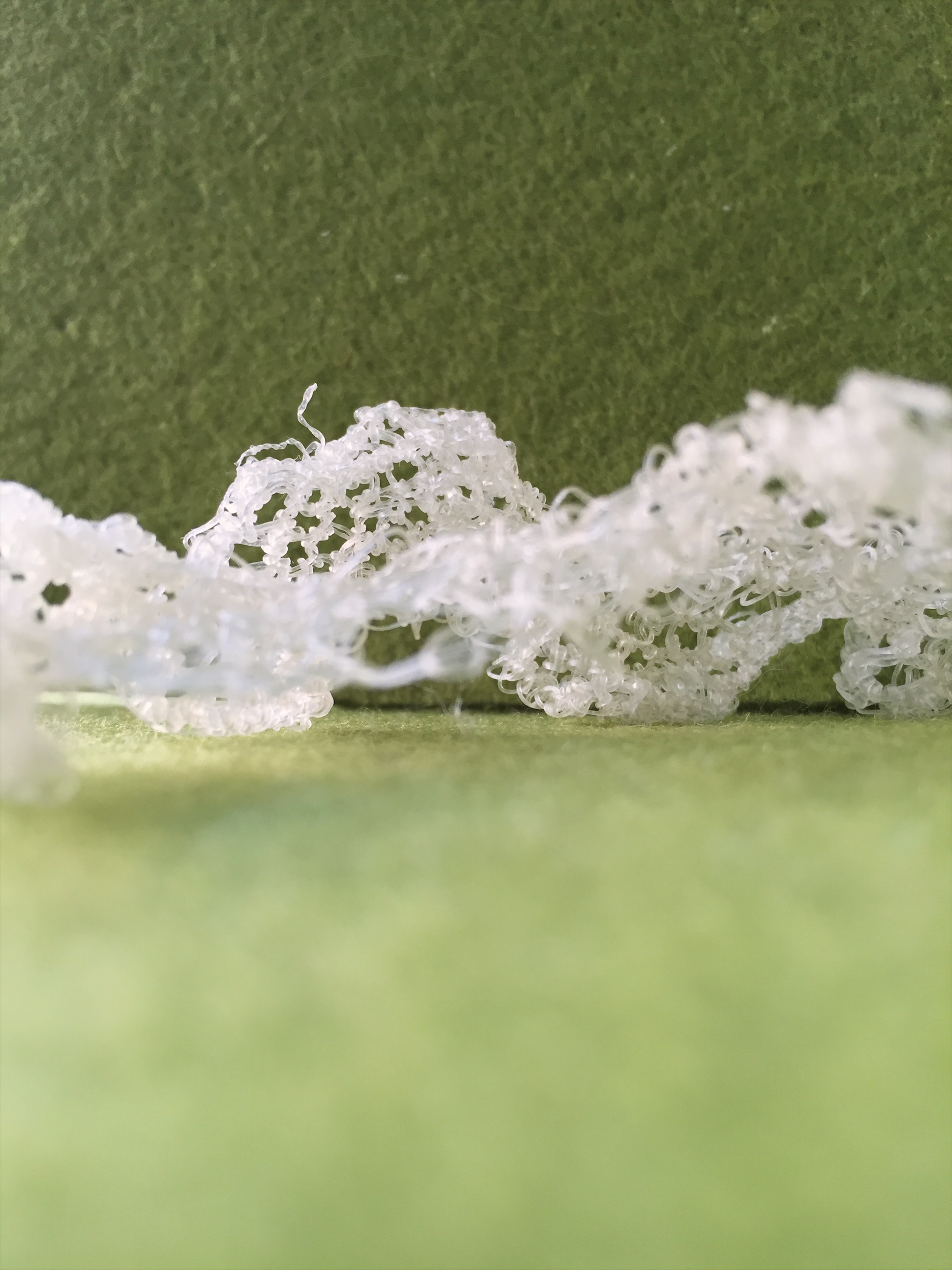


Biomaterial Textile Futures
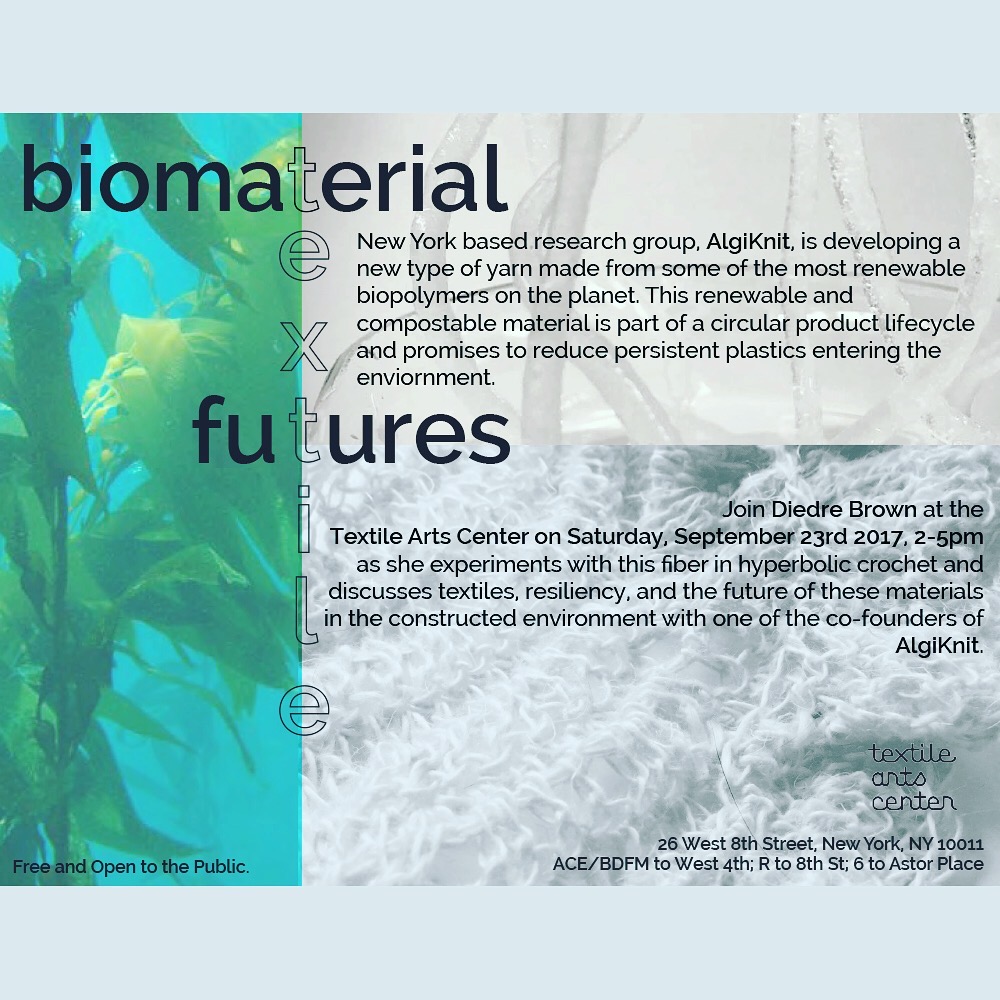
On Saturday, 23 September 2017, my guest 2017 National Geographic Chasing Genius award winners, AlgiKnit, and I discussed biomaterials, textiles, resiliency, and crocheting AlgiKnit hyperbolically.
25-30 September 2017
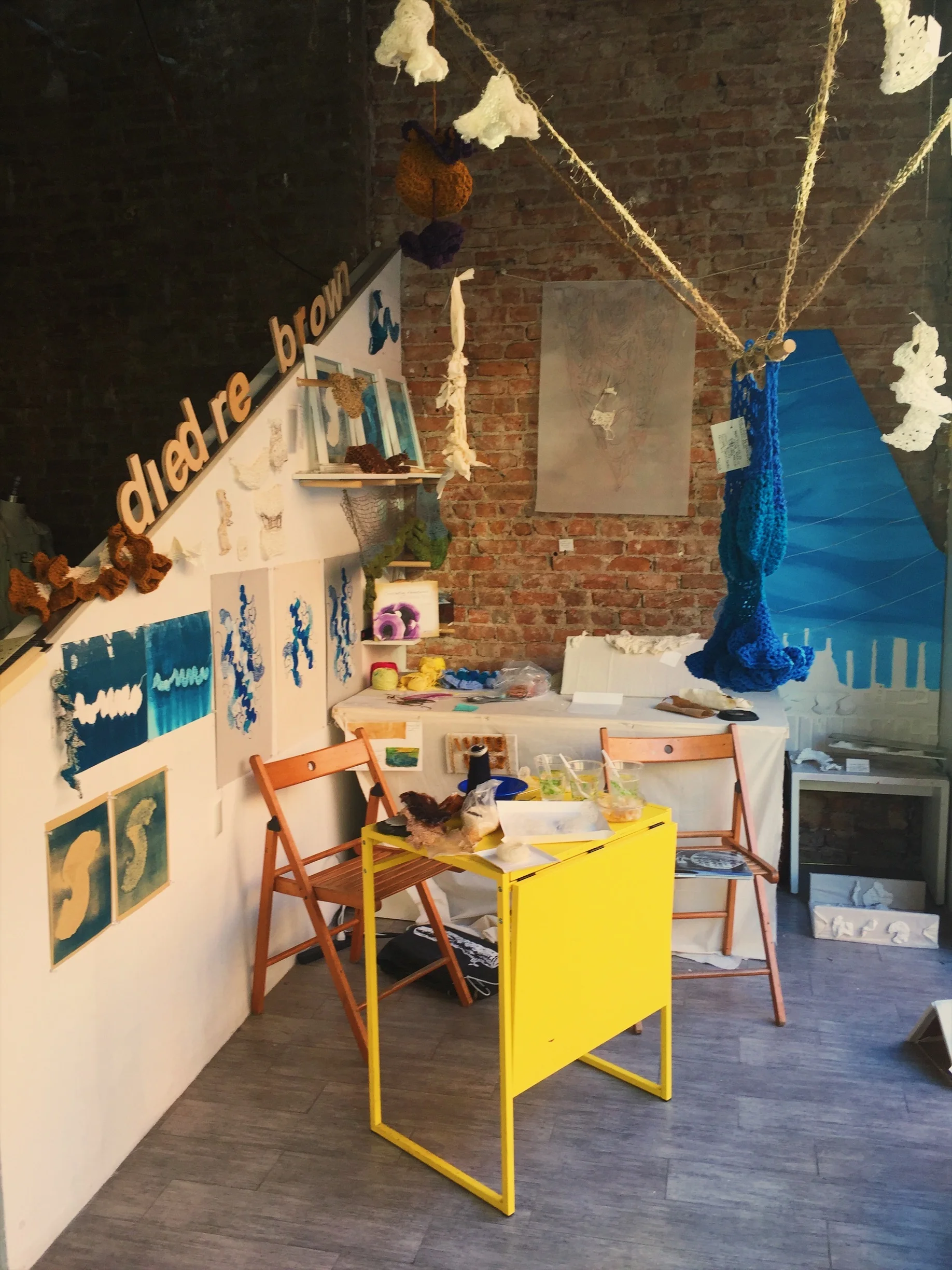
The final works produced and views of my studio space during my residency at the Textile Arts Center.
Like nature, the resiliency of textiles is a story of form. A mystery of geometric interplays, textiles are ever present yet not fully understood. Stop by #tacmanhattan to learn more about natural hyperbolic structures, and to understand why I'm exploring crochet techniques in the generation of textiles as method of research.
Tuesday-Thursday 11-5p, Saturday 2-5p.
#wildcrochet #textileart #textiledesign#hyperbolic #bioart #biodesign #wipresidency @textileartscenter.

Like nature, the resiliency of textiles is a story of form. A mystery of geometric interplays, textiles are ever present yet not fully understood. Stop by #tacmanhattan to learn more about natural hyperbolic structures, and to understand why I'm exploring crochet techniques in the generation of textiles as method of research.
Tuesday-Thursday 11-5p, Saturday 2-5p.
#wildcrochet #textileart #textiledesign#hyperbolic #bioart #biodesign #wipresidency @textileartscenter.
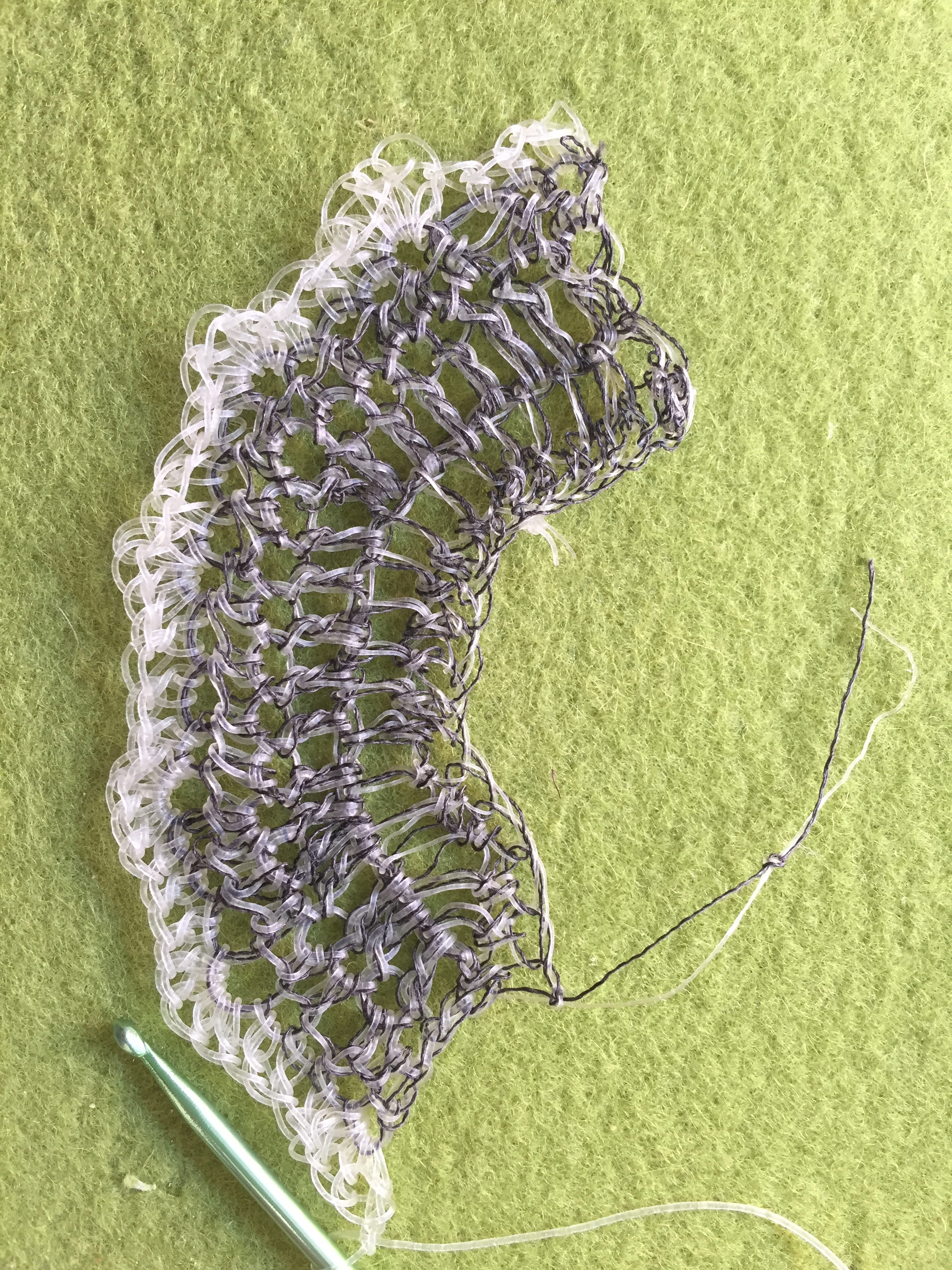
I combined the AlgiKnit filament with Habu Textiles's Silk and Stainless Steel Thread. The rows containing this combination were crocheted using a Tunisian Stitch and then combined and worked in the round.

It took looking at overlayed photographs of #ruthasawa's work (currently on show @davidzwirner nyc) to start working in the pseudosphere with three different algorithms. While I was working on this piece, I realized that I had seen elements of this before--in the work of #borromini's and #guarinoguarini's dome structures. What's neat about this crocheted structure is that it can support itself. Stay tuned (or stop by #tacmanhattan) for more details.
#wipresidency #wipresident@textileartscenter #crochet #wildcrochet#pseudosphere The yarn is pine paper by @habutextiles.

It took looking at overlayed photographs of #ruthasawa's work (currently on show @davidzwirner nyc) to start working in the pseudosphere with three different algorithms. While I was working on this piece, I realized that I had seen elements of this before--in the work of #borromini's and #guarinoguarini's dome structures. What's neat about this crocheted structure is that it can support itself. Stay tuned (or stop by #tacmanhattan) for more details.
#wipresidency #wipresident@textileartscenter #crochet #wildcrochet#pseudosphere The yarn is pine paper by @habutextiles.
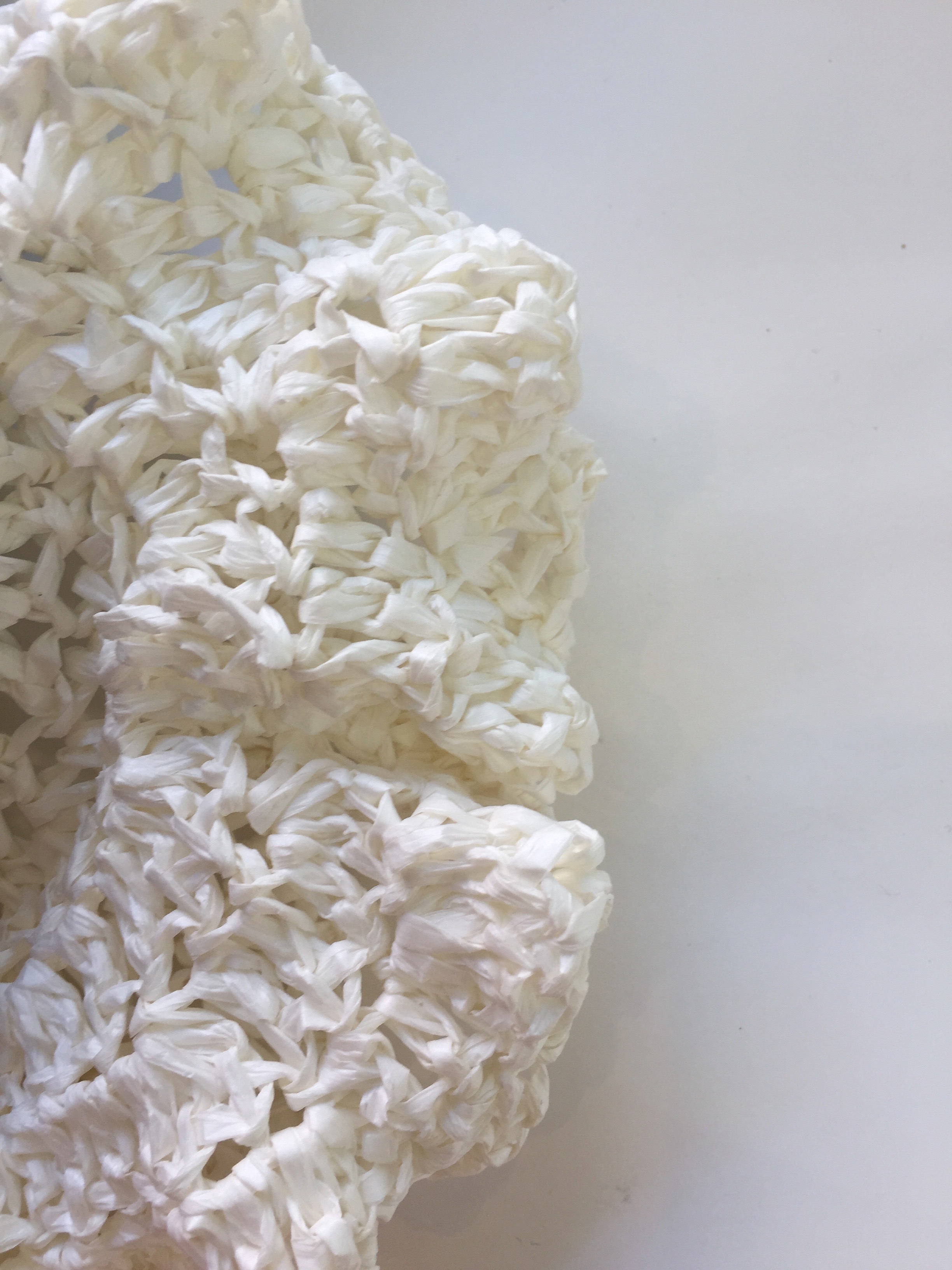
It took looking at overlayed photographs of #ruthasawa's work (currently on show @davidzwirner nyc) to start working in the pseudosphere with three different algorithms. While I was working on this piece, I realized that I had seen elements of this before--in the work of #borromini's and #guarinoguarini's dome structures. What's neat about this crocheted structure is that it can support itself. Stay tuned (or stop by #tacmanhattan) for more details.
#wipresidency #wipresident@textileartscenter #crochet #wildcrochet#pseudosphere The yarn is pine paper by @habutextiles.